Therapy and the Sikh Path: Can IFS Fit My Faith?
- Everything IFS

- Nov 28
- 2 min read
Updated: 3 days ago

Many Sikhs approach therapy with hesitation. Questions arise quietly in the mind
Does therapy mean I’ve lost faith?
Is talking about my pain disrespecting Hukam?
Could this take me away from Naam, or from trust in Waheguru?
These are deeply human questions, not signs of weakness, but signs of devotion. They come from wanting to stay true to the Guru’s teachings while caring for one’s own suffering.
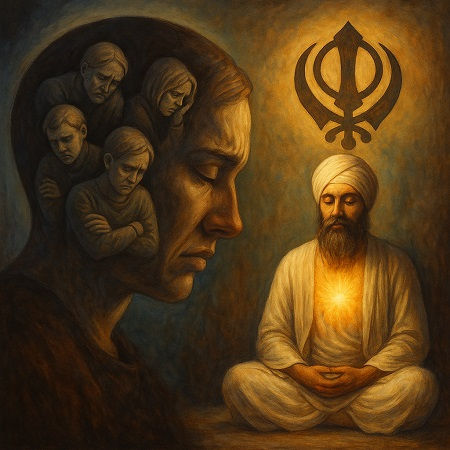
Internal Family Systems (IFS) offers a way of healing that aligns beautifully with Sikh values because it does not replace faith; it deepens it. IFS begins with one simple truth: every part of you is welcome. It sees that our minds hold many voices, some in pain, some protecting that pain — and that lasting healing happens when we meet them with compassion instead of judgment. Sikhism has always taught this same truth in its own language: that divine light (Jot) exists in everyone, even within the parts of ourselves we wish to hide.
One common worry is that therapy might encourage self-centeredness, as if focusing on your emotions means forgetting the Guru. But IFS does not ask you to worship the self, it invites you to become aware of the Self that the Guru already placed within you. Sikhism calls it Gurmukh Avastha, living guided by the Divine within rather than the restless mind (Manmukh). Therapy in this spirit is not about turning away from God; it is about clearing what blocks your remembrance.
Others may fear that talking about trauma dishonors faith, that true strength is shown by acceptance and endurance. But Sikh history is filled with examples of deep emotional courage, of saints and warriors who faced suffering not by denial but by meeting it in God’s presence.
IFS follows that same rhythm: it never forces you into painful memories, never rushes or pushes. It teaches you to build safety first, to earn your own trust, and to let healing unfold naturally. This mirrors the Sikh principle of Sehaj, the gentle, gradual unfolding of truth in divine timing.
For those who hold trauma, IFS becomes a compassionate structure for doing what Naam Simran and prayer do on the spiritual plane, creating space for stillness, presence, and remembrance. The therapist’s role is not to interpret your faith, but to support your process of becoming whole.
In IFS, the healing energy is not the therapist; it is your own Self-energy, calm, compassionate, courageous, the same qualities Sikhism sees as the reflection of the Divine.
If you ever wonder whether therapy violates Sikh values, it can help to remember this:
Sikhism calls you to live in truth, and
IFS helps you uncover what keeps you from it.
Both paths invite humility, compassion, and service — not separation from God, but a return to the heart where God already dwells.
When practiced with sensitivity and respect, IFS therapy can become another form of Simran: listening within, with the same reverence you would bring to prayer. It is not about fixing what’s broken; it is about remembering that the Divine Jot has been shining inside you all along.


Comments