IFS and Sikhism: How They Blend Beautifully Together
- Everything IFS

- Nov 29
- 2 min read
Updated: 3 days ago
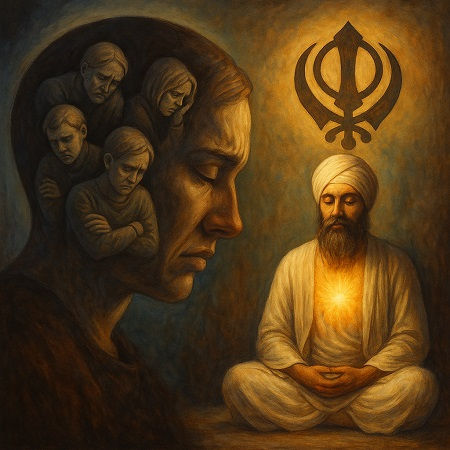
When people first hear Internal Family Systems (IFS) and Sikhism mentioned together, it might seem like two very different worlds, one rooted in Western psychology and the other in ancient Eastern spirituality. Yet when you look closer, their teachings begin to harmonize like two instruments playing the same melody in different octaves. Both paths guide us inward, toward clarity, compassion, and a living connection with the divine light within.
IFS teaches that we are made up of many inner parts, each carrying its own feelings, beliefs, and experiences. Beneath them all lives the Self, calm, curious, confident, compassionate, connected, creative, courageous, and clear.
Sikhism speaks of this same essence through the concept of Gurmukh, the one who lives guided by the Guru’s wisdom rather than the pull of ego, emotion, or desire. The Gurmukh doesn’t suppress their human impulses but learns to see through them with loving awareness, the same way IFS invites us to be with our parts rather than push them away.
In Sikh teachings, the Five Thieves, Kaam (lust), Krodh (anger), Lobh (greed), Moh (attachment), and Ahankar (ego), are described as forces that pull the mind from its divine center.
In IFS language, these can be seen as protective parts that arose to help us survive, but now act out of fear or pain.
Instead of battling them, IFS encourages us to listen with curiosity:
what is this part afraid of?
What does it need?
Sikhism offers a similar invitation through Simran, the meditative remembrance of Naam, or divine truth, which gently calms these inner thieves by bringing the soul back into alignment with love.
Both IFS and Sikhism reject the idea of inner enemies. They teach that healing doesn’t come from fighting ourselves but from recognizing that every part, even the ones that cause harm, is ultimately trying to serve us. Through awareness, compassion, and connection, what was once distorted becomes purified. The mind that once fought itself begins to rest in the peace of Self, or as Sikhism would say, in the remembrance of the One.
In this way, IFS and Sikhism are not opposites but reflections.
IFS offers a psychological map of what Sikhism has always expressed spiritually: that freedom comes not through suppression but through love, not through force but through presence. When the Self and the soul meet, healing happens naturally.


Comments