From Manmukh to Gurmukh: The Sikh Inner Shift from Ego to Self
- Everything IFS

- Nov 29
- 2 min read
Updated: 3 days ago

In Sikhism, the journey from Manmukh to Gurmukh is the essence of spiritual transformation.
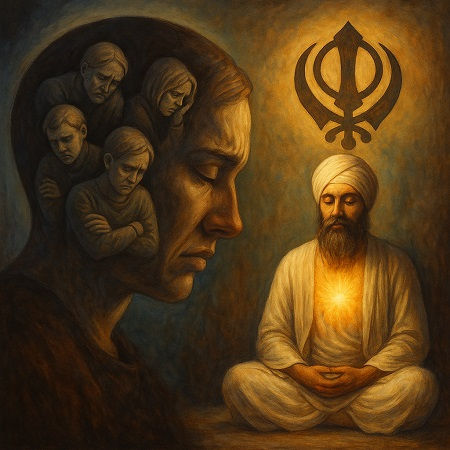
The Manmukh is led by the restless mind, ruled by ego, fear, and desire.
The Gurmukh is guided by the Guru’s wisdom, anchored in Naam, and lives from the divine center within.
Internal Family Systems (IFS) describes a remarkably similar inner process, the shift from living under the rule of our protective parts to living Self-led, where clarity, compassion, and calm guide every moment.
IFS teaches that within each of us are many parts, inner voices that hold pain, fear, or responsibility. Some parts protect us by controlling, striving, pleasing, or judging. Others carry deep wounds and vulnerability.
Sikh wisdom has long spoken of this same inner fragmentation through the lens of Haumai, or ego, the “I” that forgets the Divine and identifies with its fears and roles. When Haumai leads, we live like the Manmukh, reacting, defending, chasing, grasping.
The work of healing begins when we stop identifying with these inner movements and begin witnessing them instead. IFS calls this awareness unblending, recognizing that our anger, shame, or fear is not who we are, but a part of us seeking care.
Sikhism calls this awakening Naam Simran, the practice of remembering who we truly are beneath the noise of the mind.
Both paths teach that liberation begins not in rejection, but in remembrance.
When the Self in IFS begins to lead, it expresses the same qualities that define the Gurmukh, calmness, compassion, courage, curiosity, and clarity.
The Gurmukh does not destroy the ego; they illuminate it.
Just as IFS invites the Self to gently lead and heal each part, Sikhism teaches us to bring every thought, emotion, and impulse under the loving discipline of the Guru’s wisdom. In both paths, leadership arises not from control, but from presence.
The IFS process of unburdening mirrors the Sikh experience of surrender. In IFS, when a part releases the pain it carries, it becomes free to return to its natural, healthy state.
In Sikhism, when the mind surrenders its attachment to ego, it too is purified, what once was bondage becomes devotion. Through this surrender, the individual self (Haumai) dissolves into the universal Self (Ik Onkar).
Living Self-led is not about perfection. It is about awareness. A Gurmukh is not someone who never feels anger, desire, or fear, but someone who recognizes these energies as temporary visitors and returns again and again to the still center within.
In IFS terms, it is the ongoing practice of letting Self lead, rather than our parts.
Both Sikhism and IFS call us home to the same truth: we were never broken. Our light was only covered by layers of fear, pain, and pride.
The path of the Gurmukh, like the path of Self-leadership, is the daily practice of uncovering that light and letting it guide every action, every thought, every breath.
When the Self leads, the ego bows. When the Gurmukh awakens, the Manmukh dissolves. And in that surrender, what remains is peace, not as an idea, but as the living presence of the Divine within.

Comments