Sikhism Meets Internal Family Systems
- Nov 28, 2025
- 4 min read

Two Paths to Wholeness That Quietly Speak the Same Language
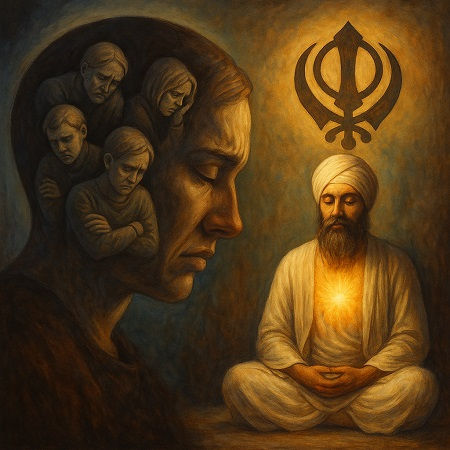
When people first hear Internal Family Systems (IFS) and Sikhism mentioned together, they often pause. One sounds like a modern therapeutic model; the other, an ancient spiritual path. Yet both, in their own ways, guide us to the same destination — a mind and heart restored to peace.
At first glance they seem worlds apart: IFS explores inner multiplicity, Sikhism affirms divine oneness. One speaks of parts and protectors; the other, of Naam and Gurmukh. But beneath the difference in language lies a shared truth — that healing begins when we turn inward with compassion and remember who we are in the light of the Divine.
The Heart of Each Path
Sikhism teaches that the root of all suffering is Haumai — the illusion of separateness that pulls us away from the remembrance of the One. Liberation arises through Naam Simran, the steady remembrance of God’s presence, and through the transformation from Manmukh (ego-led) to Gurmukh (Guru-led). The path is one of humility, service, and dissolving the self that clings.
Internal Family Systems teaches that the mind is a living ecosystem of “parts” — each carrying feelings, memories, and roles that once helped us survive. Beneath them all is the Self, a calm, compassionate awareness that naturally leads with courage and clarity. Healing happens when we lead our inner parts from that Self instead of from fear or control.
Both paths insist that love — not rejection, not suppression — is the true healer. Both trust an inner wisdom that already knows how to guide us home.
Where They Meet
A shared faith in inner guidance. Sikhism’s remembrance of Naam and IFS’s Self both describe the same inner presence: steady, compassionate awareness that can hold every emotion without fear.
A gentle approach to suffering. Neither path demands that we destroy the ego or banish our parts. They invite us to see them clearly, meet them kindly, and let truth soften what pain created.
Forgiveness as unburdening. Sikhism calls it releasing ego through humility; IFS calls it unburdening the parts. In both, we remember that pain never defined who we are.
Peace as remembrance. In IFS, Self-energy is revealed when protectors rest. In Sikhism, divine peace (Shanti) arises when we remember the One within all.
Why Blending Them Helps
It grounds spiritual practice. For many, meditation or Simran can feel unreachable when trauma or anxiety fills the body. IFS offers tools to meet those sensations gently, allowing Sikh practices to become embodied rather than abstract.
It humanizes therapy. IFS can grow technical; Sikh teachings re-infuse it with reverence. Therapy becomes more than technique, it becomes sacred listening.
It prevents spiritual bypass. Instead of skipping over emotional pain in the name of devotion, IFS helps bring each part into the light of compassion, turning remembrance into real integration.
It accelerates real change. As protectors relax and exiles heal, the Sikh promise of inner peace stops being an idea and starts becoming a felt experience.
Where They Differ
Language and scope. Sikhism speaks in the poetry of divinity — the One Reality, Ik Onkar. IFS stays within the human story, helping us untangle the knots of fear and trauma before returning us to wholeness.
Goal of practice. Sikhism points toward union with God; IFS focuses on harmony within the inner world. Many find that doing both grounds their spirituality while deepening emotional healing.
Tone of guidance. Sikhism speaks through devotion and remembrance; IFS speaks through curiosity and relational dialogue. One expands vision, the other steadies the nervous system.
Seeing these differences clearly keeps humility intact. We don’t need to collapse the two paths into each other — we can let them dance.
How Integration Can Look in Practice
Imagine a moment of inner conflict. Someone says something that stirs anger.
Through an IFS lens, you might notice:
there’s a part that feels disrespected,
another that wants to react,
another that fears being unkind.
You pause, breathe, and listen to each one with compassion.
Through a Sikh lens, you might remember: This anger is Krodh, one of the Five Thieves, rising to protect me. You recite Naam gently, not to suppress the emotion, but to bathe it in remembrance. As calm awareness returns, the same energy that fueled anger transforms into clarity and truth.
IFS gives language to the inner process; Sikhism gives it sanctity. Together, they form a bridge between the psychological and the spiritual, one gives voice to the wound, the other reveals that beneath it, you were never separate from the Light.
A Living Synthesis
Some call this integration learning two dialects of the same language of healing.
Sikhism speaks in the poetry of Spirit. IFS speaks in the pragmatics of psyche.
One tells us we were never apart from the Divine; the other helps the parts of us that still believe we are.
Whether you call that inner presence Self, Naam, or Jot, both paths guide you back to it, step by step, breath by breath, part by part.


Comments