The Self as the Inner Tao: Trusting the Leader Within The Spiritual Architecture of IFS
- Nov 18, 2025
- 3 min read

What is the IFS Self, reallyI
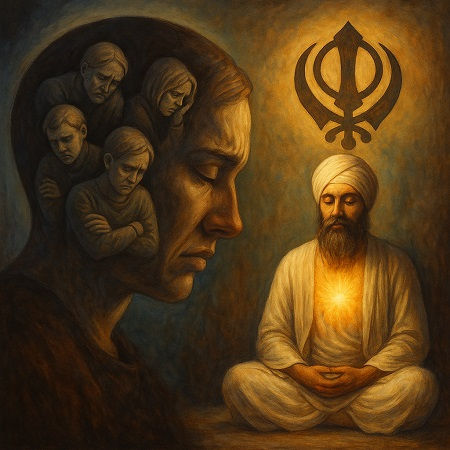
In the Internal Family Systems model, the Self is not a concept, a behavior, or a polished persona. It’s not something you create, it’s something you uncover. It’s already there beneath the noise, the roles, the pain, and the protective patterns.
When parts step back, this Self begins to emerge.
It leads with
calm,
clarity,
compassion,
confidence, and
connection.
Many who experience it say it doesn’t feel like “them” in the usual egoic sense. It feels larger. Quieter. Unshakable.
Taoism speaks of something similar, a quiet force behind all things, called the Tao. It is the Way that cannot be spoken. The source that cannot be grasped. Yet when someone returns to it, they often feel more aligned, more peaceful, more whole.
In many ways, the IFS Self is not separate from the Tao. It is the expression of the Tao within. A way the Tao shows up through you.
The yin-yang of Self energy: compassion and confidence
Richard Schwartz, founder of IFS, often speaks of two core qualities of the Self: compassion and confidence. One soft, one strong. One yielding, one clear. In Taoist philosophy, this is yin and yang, two forces that are not in opposition, but in relationship. Yin nurtures. Yang directs. Yin receives. Yang acts. When they’re in balance, harmony flows. When they’re out of balance, systems collapse.
In the same way, a Self-led person isn’t just compassionate, they are also confident. They can set boundaries with love. They can lead firmly without domination. Taoism reminds us that true power is not forceful. “The best leaders are those the people hardly know exist.
When their work is done, the people say, ‘We did it ourselves.’” Schwartz often quotes this verse when describing a Self-led therapist or guide. The parallel is striking: the Tao leads without control. So does the Self.
The Self is not an identity — it’s an essence
Some people hesitate around the language of Self, fearing it might reinforce ego or separateness. But in IFS, the Self isn’t a separate “I”, it’s what’s left when all the striving parts rest.
It doesn’t compete.
It doesn’t cling.
It watches with love.
It acts when needed.
It dissolves when not.
Taoism teaches that the Tao does not need to be grasped or defined. It simply flows. Similarly, the Self doesn’t need to be asserted. It simply is. And from that place, healing happens naturally.
Rather than reinforcing the small self, IFS often helps people unblend from it. They find their way back to something deeper. Something that sees all the parts without fusing to them. A person in Self is not saying “I am this” or “I am that.” They are listening, witnessing, allowing, and from that quiet center, they are choosing.
Taoism and Self-leadership in everyday life
In Taoist texts, the sage does not need to dominate the world. They stay close to the ground. They do not rush to fix what is not broken. They move with the flow, not against it. This doesn’t mean passivity, it means attunement.
A Self-led person lives much the same way. They don’t rush in to silence parts or force outcomes. They move slowly enough to notice. They bring compassion to the part that panics, and confidence to the part that hides. They are not controlled by parts, but they don’t exile them either. They lead with tenderness and truth, not rules or rigidity.
This is Taoism in action. Living from the inside out. Letting the world unfold as the inner world finds balance.
A sacred architecture — not just psychology
For some, this blending of IFS and Taoism becomes a spiritual path. It may not require belief, but it evokes reverence.
To sit with your protectors.
To listen to your exiles.
To lead your system with softness.
These are acts of devotion, to the Self, to the Tao, to the whole of what you are.
People who walk this path often find themselves more grounded in their lives, less reactive in their relationships, and more connected to something steady that does not vanish when emotions rise.
This doesn’t mean life becomes easy. But it becomes held, from within.
Final reflection
The Self in IFS is not a role you play. It is a return to what has always been guiding you from underneath. The Tao is not something you achieve. It is something you stop resisting. When these two meet, healing becomes less about fixing and more about remembering.
There is a leader inside, not loud, not perfect, but deeply present. Taoism calls it the Way. IFS calls it the Self. Either way, it is yours. And it is enough.


Comments