Taoist Embodiment Meets IFS Dialogue: Practices That Harmonize Where Movement, Breath, and Parts Work Meet
Why embodiment matters in both traditions
Taoist practices are rooted in the body.
Breath,
posture,
movement, and
presence
are all essential to the Taoist path, not as performance, but as a way to live in alignment with the Tao. Internal Family Systems, while often practiced through visualization and dialogue, also invites people into direct relationship with their inner world through felt sense.
When the two meet, something powerful happens. The integration helps people not just talk about their parts but physically soften around them, move with them, and feel their truths rise from deep within. For many, this union brings the IFS journey out of the head and into the whole body, creating healing that is not just insight based, but cellular.
Practical integrations people are using now
Some practitioners are already combining Taoist embodiment with IFS in practical, creative ways. These integrations are not rigid techniques, but evolving invitations, adaptable for both therapists and clients, coaches and practitioners. Here are a few:
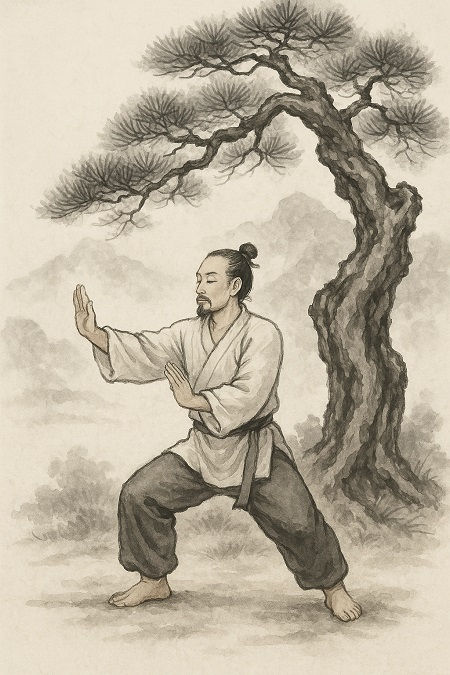
George Thompson, a lineage holder in Taoist martial arts and an IFS practitioner, has been leading workshops that unite breath, movement, and parts work. In his sessions, a participant might move through a Tai Chi form slowly while tuning into a part, noticing what arises in the body with each step. Afterwards, they sit in silence and invite a conversation with that part. Participants often report surprising clarity, deep emotional release, and a sense of unity that feels both ancient and personal.
This kind of fusion, rooted in Taoist tradition but flexible enough to meet modern inner work, shows how embodiment practices can amplify the IFS process, especially for clients who struggle to stay in their heads.
Why this matters now
The nervous systems of our time are overloaded. Talk therapy alone, for many, is no longer enough. Taoism reminds us that healing does not happen only through words, it happens through presence, through the rhythm of breath, through the return to natural flow. IFS gives people a map of the inner world. Taoist embodiment gives them a way to walk it with their whole being.
Together, these two practices support:
Greater Self energy access for clients who feel numb, disconnected, or overly intellectual•
Quicker unblending for systems that are stuck in analysis or hypervigilance•
Deeper grounding for clients with trauma who need to feel their body is safe•
More holistic healing by restoring the link between mind, body, and spirit
Sample structure for practitioners
Here is one possible session flow to try or adapt:
Begin with 2–5 minutes of breath led movement. Flowing arms, gentle hip circles, rooted stance, anything that centers the body and invites awareness downward.
Pause for stillness. Eyes closed. Ask: “What part is present with me right now?” or “What do I feel just beneath the surface?”
Enter IFS dialogue. Follow the part’s story, staying connected to breath and body throughout. If intensity rises, return to movement.
Close with integration. Ask the body: “How does this part want to be honored now?” Let the client move, draw, or breathe accordingly.
Final reflection
When Taoism and IFS meet in the body, healing becomes less about control and more about connection.
Instead of fixing, we begin listening.
Instead of striving, we begin allowing.
And in that space between movement and stillness, something sacred begins to unfold, not as a method, but as a way of being.
These integrations are not prescriptive. They are invitations. Therapists, coaches, and clients alike are discovering that when they feel more of themselves, more healing is possible. The Tao does not need to be forced. It only needs space. And IFS gives us the tools to make room.


Comments