🌓 Module 13 — The Moon Through the Zodiac | Moon Magic Course
Updated: Sep 30
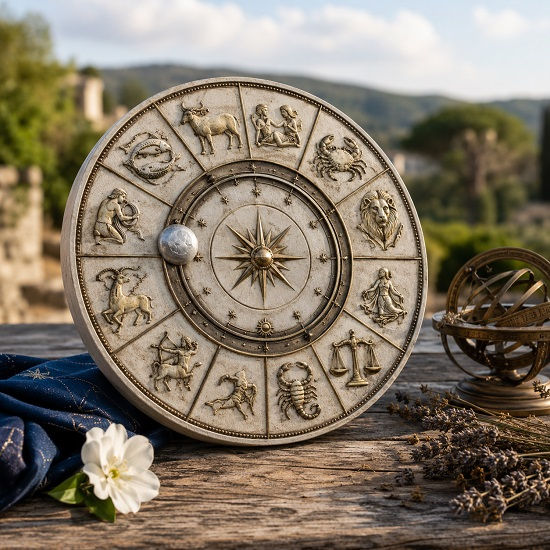
Free Course by Everything IFS Academy Witchcraft Series
Help us reach the people who may need this most by sharing this free course with friends, family, colleagues, online communities, social media or on your own website.
🎧 Audio - listen on the go (coming soon)
🌓 Module 13 — The Moon Through the Zodiac
The Same Intention, a Different Approach
The witch has been meaning to write a difficult letter, and every attempt comes out longer and less clear than the last. Tonight she opens her lunar calendar and finds, beside the phase, a second piece of information: the moon is in Gemini. She knows Gemini keeps the house of language, questions, and exchange, and that settles her approach. Tonight she will prepare her pen for clear expression and write the three things the letter actually needs to say.
That is this lesson in one scene. You already command the moon’s first calendar, the phases, with their grammar of build and release. The zodiac is her second calendar, running underneath the first, and it adds one thing to your practice: a quality. Courage, steadiness, tenderness, discernment, imagination, twelve flavors the sky rotates through every month, free for the working witch to time by or borrow from. By the end of this lesson you will read both calendars off one page, know all twelve signs as a practitioner rather than a horoscope reader, find and use your own natal moon, and finally collect the answer this course has owed you since the cycle lesson: what void of course really means, and what to do about it.
The Second Wheel
Remember the odd little number from the cycle lesson, 27.3 days, the moon’s orbit measured against the stars? Here is where it pays off. As she circles, the moon passes through each of the zodiac’s twelve signs in turn, spending about two to two and a half days in each and lapping the whole circle in that 27.3-day round. “The moon is in Gemini” means exactly that: tonight she stands in Gemini’s section of the sky’s circle.
Because the sign wheel runs on 27.3 days and the phase wheel on 29.5, the two never lock together: this month’s full moon rises in one sign, next month’s in the next sign along, and over a year of practice every phase eventually visits every sign. That independence is the whole opportunity. Phase tells you the direction of a working, building or releasing; sign offers the approach, the quality it can travel in; and two wheels turning at different speeds means the sky is endlessly dealing you fresh combinations.
Three pieces of honest bookkeeping before the signs themselves. First, this course uses the tropical zodiac, the standard of Western astrology, whose twelve equal signs are anchored to the March equinox; sidereal systems, anchored to the stars, are fully legitimate traditions that will name different signs for the same night, so pick one calendar marked tropical and stay consistent, and know that an astronomy app naming the constellation behind the moon is answering a different question, since the unevenly sized constellations are not the equal signs that share their names.
Second, the sign wheel does not flip in the Southern Hemisphere; the same positions hold worldwide. And third, the honest frame this course gives everything: astrology is a symbolic tradition, not established science, and within the craft that is precisely its use. A Taurus moon does not force anyone on earth to feel patient. It offers patience as the night’s available flavor, and a witch can work with a quality deliberately whether or not it happens to describe her mood.
The Generator: Four Elements, Three Modes
The twelve signs are not twelve random personalities; they are a four-by-three grid, and knowing the grid means never truly forgetting a sign again. Every sign belongs to one of four elements, its temperament.
Fire signs, Aries, Leo, and Sagittarius, carry courage, enthusiasm, and expression.
Earth signs, Taurus, Virgo, and Capricorn, carry steadiness, practical care, and endurance.
Air signs, Gemini, Libra, and Aquarius, carry language, ideas, and exchange.
Water signs, Cancer, Scorpio, and Pisces, carry feeling, intimacy, and imagination.
And every sign moves in one of three modes, its gait: cardinal signs initiate, fixed signs sustain and concentrate, mutable signs adapt and transition. Cross them and each sign appears: Taurus is fixed earth, patient cultivation itself; Gemini is mutable air, quicksilver exchange; Cancer is cardinal water, feeling that acts. One clarifying note for ritual: a fire-sign moon does not require a candle, and an air-sign moon does not require incense. The element lives in the purpose and the action; a spoken declaration is fire, a careful repair is earth, and the correspondence chest stays optional as ever.
The Twelve, As a Witch Uses Them
Here is the working tour: each sign’s qualities, one suggested use, and, where the old farmers kept notes, the garden lore that ties this wheel back to the planting craft you met last lesson. These are open doors, never fences; Scorpio is not reserved for frightening work, and Pisces does not require you to chase visions.
Aries days carry courage, initiative, and directness: bless a tool for a first step, cast the working that needs nerve, send the thing you have been hovering over. Fire, and in the garden barren; the old-timers pruned fruit trees in fire signs so the cuts would callous clean.
When she rides Taurus, the flavor is stability, patience, and the pleasure of the senses: charge an object for steady tending, bless the kitchen, work any spell that must last. Fixed earth, fertile ground; the almanacs’ favorite for planting what should endure.
Gemini gives language, curiosity, and adaptability: prepare the pen, draft the hard message, work charms for interviews, introductions, and honest talk. Air, barren in the garden and busy everywhere else.
Under Cancer the house comes first: home, belonging, nurture, and memory. Bless the household, ward the door, work anything that feeds or shelters. Cardinal water, and in the planting lore the most fertile sign of the whole wheel; the old growers saved their best sowing for the moon in Cancer.
A Leo moon warms creativity, generosity, and confidence: bless the creative work before it goes public, charge the performance charm, celebrate loudly. Fire, barren for planting, and folklore’s champion weeding sign; weeds pulled under Leo, the mountain gardeners swore, do not come back.
Virgo’s days sharpen discernment, detail, and service: prepare tools for careful repair, clean and reorganize the altar, work the spell that lives in the fine print. Mutable earth, traditionally counted lean for sowing and superb for tending.
In Libra the themes are reciprocity, fairness, and cooperation: make the charm for your side of a respectful conversation, work partnership blessings, weigh a decision with both hands. Air, and the garden lore’s lovely exception, the one air sign counted semi-fertile, the flower-planting moon.
Scorpio brings depth, privacy, and transformation: mark endings that matter, work the release that needs to reach bone, keep the secrets that are yours to keep. Fixed water, fertile in the garden and famously thorough everywhere.
Sagittarius opens exploration, meaning, and the long view: bless the notebook for a new study, work travel charms, cast toward the horizon rather than the doorstep. Mutable fire, barren soil, boundless sky.
Capricorn steadies structure, responsibility, and endurance: strengthen a commitment to sustained work, bless the budget, build the working meant to hold weight for years. Cardinal earth; the root-crop moon of the old planting calendars, where what grows grows downward and keeps.
An Aquarius moon favors community, independence, and experiment: dedicate your contribution to a shared project, work for causes bigger than one hearth, try the unorthodox version of the spell. Air, barren, brilliant.
Pisces closes the wheel with imagination, compassion, and spiritual receptivity: prepare the quiet space, work the dream and divination arts, cast the mercy you have been withholding, including from yourself. Mutable water, deeply fertile, and the wheel’s softest landing.
Combining Phase and Sign
Now lace the two wheels, which takes one sentence of method: phase sets the direction, sign sets the approach. Communication under Gemini, run both ways: a waxing Gemini moon suits strengthening your ability to say the true thing clearly, while a waning Gemini moon suits releasing the habit of speaking before you have listened. Same subject, opposite directions, each with its natural night. Or Taurus: waxing, tend the consistency of a practice you are establishing; waning, release a possession or simplify a material commitment. One clear relationship among purpose, phase, and sign is enough for any working; you are choosing a flavor, not solving an equation.
One mechanic will make every astrology headline you ever read suddenly legible. At the exact new moon, sun and moon stand together, so they share a sign. At the exact full moon they stand opposite, so a full moon always rises in the sign across the wheel from the sun’s: Aries opposite Libra, Taurus opposite Scorpio, Gemini opposite Sagittarius, Cancer opposite Capricorn, Leo opposite Aquarius, Virgo opposite Pisces. “Full moon in Aries” therefore happens in Libra season, and the pairing itself, fiery moon facing diplomatic sun, is a layer some practitioners love to read. Begin with the moon’s sign alone; the oppositions will be waiting when you want them.
Your Natal Moon, and the Monthly Homecoming
Every person alive was born under the moon in some sign, and that placement, your natal moon, is astrology’s name for your emotional home base: the sign whose weather your inner life speaks natively. Finding it takes two minutes with any free birth-chart calculator, fed your birth date, place, and time. The time matters more here than anywhere else in a chart, because the moon moves about thirteen degrees a day and changes signs every couple of days; born on a boundary day without a recorded time, you may sit between two candidates, in which case read both and trust the one that recognizes you. What the deep art makes of your natal moon, its house, its aspects, its conversation with the whole chart, is genuinely rich territory, and it belongs to astrology’s own study; this academy carries a full astrology course, and a deep moon-sign tour besides, for every student this page makes hungry.
What this course hands you is the practitioner’s use, and it is lovely: once you know your natal moon sign, the transiting moon comes home to it for about two and a half days every single month. Practitioners call it a lunar homecoming, and many keep it as a small standing observance: the month’s most self-attuned days, right for the mirror blessing from the self-care lesson, for tending your own tools, for the working that is entirely about you. Mark the days on your calendar when you mark the phases, and greet the first evening simply:
“Moon in my own sign, welcome home. I keep this day for the keeping of myself.”
Void of Course: The Promise Paid
Eleven lessons ago, the cycle lesson introduced a term and promised its teaching would live here. Collect it now. As the moon crosses a sign, she forms aspects, meaningful angles, to the other planets: conjunctions, squares, trines, oppositions, sextiles, the geometry astrologers read as conversation. At some point in each sign she makes her last major aspect before leaving. The stretch from that final aspect until she enters the next sign is the void of course moon, VOC on many calendars: the moon, in the tradition’s image, off duty between appointments, finished talking in one room and not yet arrived in the next.
Voids happen every couple of days, lasting anywhere from minutes to many hours, occasionally a day or more. Traditional astrology’s counsel is famous: nothing begun under a void moon comes to fruition, so launches, signings, purchases, and new spells were routed around them. Modern practice mostly keeps a gentler version: void hours suit routine work, reflection, rest, tidying, and finishing, while beginnings get scheduled outside them. Three honesties complete the teaching. Different calendars use slightly different rules, so two sources may disagree about a void’s edges; follow one calendar and stop worrying. The convention is a convention, not a hazard, and the moon keeps shining straight through it; nothing about an ordinary errand becomes dangerous at 2:14 in the afternoon. And a practitioner who ignores voids entirely is practicing real moon magic, because this layer, like every astrological layer in this lesson, is seasoning, never the meal. If you enjoy it, your calendar already marks it; route your seed-plantings around the gaps, let the void hours be your tidying hours, and you have the whole craft of it.
Choosing a Time Without Getting Trapped in Choosing
The art of picking moments by the sky is called electional astrology, and its full form juggles more factors than this course will ever ask of you. Keep the beginner’s version, which is also the wise version: start from the purpose and the occasions actually available, then look for one useful relationship. If the perfect phase-and-sign combination sits five weeks out, ask whether the working is served by waiting, because a needed conversation should never be postponed indefinitely in search of a flawless sky. And remember the reframe that makes the whole system generous instead of restrictive: any sky can carry the work. The letter written under Virgo leans accurate; under Libra, fair; under Aries, brave enough to finally begin. The purpose stays recognizable. The sky just lends it an accent.
The Rite: A Pen Prepared for Clear Words
The working is the charging rite you already own, with the sign named into it, and it doubles as the template for every sign-timed charge you will ever do: swap the tool, the quality, and the task, and the sequence serves a sewing kit under Virgo or a paintbrush under Leo just as well. Choose a real communication that would benefit from clearer expression, and find a waxing interval with the moon in Gemini on your calendar, checking the time zone and remembering that a sign printed beside a date does not start at midnight; if she enters Gemini at four in the afternoon, the morning belonged to Taurus.
Set the page. Pen, paper, calendar, quiet surface. Write the date, local time, phase, and sign at the top; that header is the working’s timestamp and the journal’s evidence. If the pen carries an old completed assignment, close it with a sentence as the charging lesson taught; an ordinary pen dedicates directly.
Compose the intention. One sentence: “I strengthen my ability to express what matters clearly and honestly.” Adjust any word that does not fit the actual task, and keep the working aimed at your expression, never at scripting the reader’s response; the consent boundary holds in ink as everywhere.
Name the sky into it. Lift the pen and speak: “With the waxing moon in Gemini, I call curiosity and clear language into this work.” Spend a breath on what those qualities actually ask: curiosity may mean leaving room for a question, clarity may mean deleting the sentence that hides the point.
Charge it. “I charge this pen for thoughtful expression in [the task].” Attention into the tool, the intended words taking shape in the mind’s eye or in inner words, exactly as your hands learned at the windowsill.
Use it now. Write the three things the communication must convey, in plain sentences, then begin the draft from them. The rite does not require finishing or sending; it requires the tool entering real work while the charge is fresh, which is where every charge completes.
Close and carry. “The preparation is complete. I will carry this clarity into the writing.” When the communication is done, thank the pen and end the assignment; its work does not expire when the moon enters Cancer, because the purpose, not the transit, sets a charge’s lifespan.
Questions Along the Wheel
Does the sign outrank the phase? Never, in this course’s hierarchy. Phase is the engine, sign is the paint; a witch who only ever works by phase has a complete practice, and one who adds signs has a more flavorful one.
My app says the moon is in one sign and my calendar says another. Almost always tropical versus sidereal, or a calendar versus a constellation map. Check the system, pick one, stay put.
Do I need my exact birth time? Only for natal work, and mostly for boundary days; the transiting practice in this lesson needs nothing but a current calendar.
Is any moon sign bad for magic? Not one. The garden lore calls some signs barren, and that vocabulary belongs to seeds; every sign is fertile for the work that matches it, and a barren-sign moon grows spells beautifully.
And what if astrology just never sings to me? Then close this lesson with a clear conscience and a complete practice. The phases were always the spine of this course; the zodiac is a gift on the side, and gifts are allowed to be declined.
Witch Practice: The Two-Wheel Month
For one month, run the experiment properly. Add the moon’s sign to your nightly journal line, one word beside the phase, and let the entry breathe at four small facts: phase, energy words, cycle day if you keep it, sign. Find your natal moon sign this week and mark the homecoming days on your calendar, keeping the small observance when they arrive. Keep one sign-timed working during the month, the pen rite or your own adaptation to another sign and tool. And decide, out loud in the journal, your void-of-course policy: observed, or cheerfully ignored. At month’s end, read the sign column against everything else and write the honest paragraph: which signs’ days actually felt distinct, whether your homecoming days earned their name, and which parts of this layer your practice wants to keep. Keep only what earned its place; the journal line slims back down to whatever serves.
Close the entry with one question, answered in your own first-person words: Which sign’s days felt most like mine this month, and was it my natal moon’s, or somewhere I didn’t expect?
Two Calendars, One Witch
You now read the sky the way working astrologer-witches have read it for centuries: phase for direction, sign for approach, the void for the pauses, and one sign in the whole wheel that is privately, monthly, yours. The moon’s ordinary repertoire is complete.
Which leaves her extraordinary nights. Next: the special moons, blue, black, super, and the eclipses, what each one truly is, what tradition says, and the great work-or-rest debate the craft has never settled, presented fairly so you can settle it for yourself.
Disclaimer: Everything IFS Academy is an independent educational platform and is not affiliated with, endorsed by, or connected to the IFS Institute. While we strive for accuracy, errors can occur, and users are encouraged to cross-reference critical information. The courses in the Witchcraft & Folk Magic Series explore witchcraft, folk magic, and related spiritual and cultural practices for educational and personal-interest purposes only. Nothing in them guarantees any particular result, and no ritual, spell, correspondence, or practice is offered as a substitute for professional medical, psychological, legal, or financial advice. Practices that involve fire, candles, herbs, plants, or other physical materials carry real risks such as burns, allergic reaction, or toxicity, and any practice is undertaken at your own discretion and risk. They do not constitute therapy, mental health treatment, clinical training, or crisis support, and they should not be used as a substitute for professional mental health care.
Crisis Support: 🚨 If you are experiencing a mental health crisis, feel unsafe, feel at risk of harming yourself or someone else, or feel too overwhelmed to safely use self-directed practices, please pause this material and reach out for immediate support. Contact a licensed mental health professional, call or text 988 in the U.S. or Canada, or use your local emergency or crisis resources.


Comments