Chapter 46 – Tao Te Ching
The Verse (Original)
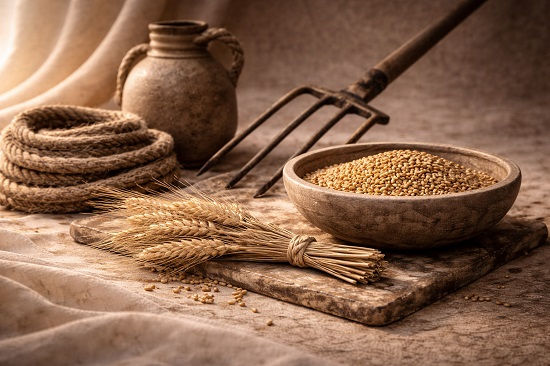
When the world follows the Tao ,horses work the fields.
When the world ignores the Tao ,warhorses are bred outside the city walls.
There is no greater sin than desire,
no greater misfortune than discontent,
no greater calamity than greed.
Whoever knows contentment is always satisfied.
The Essence — What Laozi Is Actually Saying
This chapter is razor-sharp and painfully relevant.
Laozi says:
When humanity is aligned with the Tao,
life is simple, peaceful, and grounded.
Tools of war become tools of nourishment.
Strength becomes service.
Energy returns to what supports life.
But when humanity turns away from the Tao,
when desire, ambition, and comparison take over,
violence is inevitable.
Inner violence.
Outer violence.
Social violence.
Spiritual violence.
The chapter then makes three bold claims:
• Desire is the greatest sin — not morally, but energetically. Desire pulls you out of the present, out of contentment, out of harmony.
• Discontent is the greatest misfortune — because no blessing can reach someone who cannot feel enough.
• Greed is the greatest calamity — because greed has no end, only escalation.
And the antidote?
Contentment. Deep, radical, unshakable contentment.
The person who knows “enough”cannot be manipulated,
cannot be threatened,
cannot be corrupted,
cannot be shaken.
Contentment is not passive.
It is power.
Modern Clarity — Slow, Rich, Beginner-Friendly Line-by-Line Commentary
“When the world follows the Tao, horses work the fields.”
In ancient China, horses used for farming symbolized peace.
When life is aligned, energy flows into nourishment, creation, care, sustaining what matters.
People tend to their lives instead of preparing for battle.
This line describes a world without inner or outer war.
“When the world ignores the Tao, warhorses are bred outside the city walls.”
When a society prioritizes ambition, domination, and desire, war becomes inevitable.
The image of warhorses multiplying shows a world preparing for conflict instead of cultivation.
Inside an individual, this shows up as inner chaos:
• anxiety
• restlessness
• striving
• comparison
• constant battle
Ignoring the Tao creates tension everywhere.
“There is no greater sin than desire.”
Laozi is not using “sin” morally.
He means the greatest energetic disturbance.
Desire is the endless reaching that says:
“I need more.
I am not enough.
This moment is not enough.”
Desire creates suffering the moment it arises.
Not passion.
Not preference.
Clinging desire.
Craving.
Grasping.
The mind becomes a warhorse.
“No greater misfortune than discontent.”
Discontent is the inability to rest in what are.
You could have blessings raining down on you and still feel empty.
Nothing is enough because the heart has forgotten how to land.
Discontent is a disease of the spirit.
It makes wealth feel poor and abundance feel insufficient.
“No greater calamity than greed.”
Greed is desire weaponized.
It spreads outward, devouring time, energy, relationships, morality.
Greed is the belief that more will cure the ache inside.
But “more” only deepens the ache.
Greed destroys nations and destroys inner worlds, too.
“Whoever knows contentment is always satisfied.”
This is the cure.
The anchor.
The medicine.
Contentment is not resignation.
It is spacious gratitude.
It is the ability to say:
“This moment is enough.
I am enough.
Life is enough.”
A person rooted in contentment is unshakable.
They cannot be seduced by greed
or hijacked by craving
or destabilized by comparison.
Contentment is freedom.
IFS-Informed Understanding — The Tao Inside the Psyche
“Horses working fields” → Parts serving life, not war
When Self leads, parts work together to support nourishment:
• creativity
• connection
• steadiness
• rest
• purpose
This is the inner version of horses working fields.
No inner battles.
No warhorses.
Just cooperation.
“Warhorses bred outside the city walls” → Protector escalation
When the system is out of balance, protectors ramp up:
• hypervigilance
• harshness
• panic
• perfectionism
• addiction
• reactivity
These are the “warhorses” inside you.
They multiply when parts don’t feel safe.
“Desire is the greatest sin” → Parts chasing relief
Protectors often believe:
“If I get this one thing, approval, control, success, safety, then the ache will stop.”
But chasing only increases the ache.
The “sin” here is not moral.
It’s the cycle of suffering that craving perpetuates.
“Discontent is the greatest misfortune” → Exiles left unfelt
Discontent often signals exiles who feel unseen:
• loneliness
• emptiness
• fear of insignificance
• longing for connection
When these exiles are ignored,
no achievement feels satisfying.
No milestone feels like enough.
This is the misfortune Laozi names.
“Greed is the greatest calamity” → Firefighters in overdrive
When protectors panic, firefighters take extreme action:
• bingeing
• overworking
• overbuying•
numbing
• escapism
Greed is a firefighter strategy:
a frantic attempt to fill a hole that cannot be filled externally.
“Whoever knows contentment is always satisfied” → Self-energy as the foundation
Self-energy feels like enoughness.
It’s calm.
Grounded.
Connected.
Present.
Self doesn’t crave.
Self doesn’t grasp.
Self doesn’t compare.
When Self leads, contentment emerges naturally, and parts relax.
This is inner peace.
This is the Tao inside you.
A Soft Invitation — Not Therapy, Just Curiosity
• Where do “warhorses” run in me?
• Which parts believe more will finally bring peace?
• Where do I feel discontent most strongly?
• What would contentment feel like in my body right now, just for a breath?
• Which part of me longs most for the experience of “enough”?
Closing — The Tao and IFS Share the Same Gate
Laozi whispers:
When you return to contentment,
war dissolves.
Greed quiets.
Desire softens.
Peace returns.
IFS whispers the same:
When Self leads,
protectors relax,
exiles feel held,
and the system settles.
Both paths say:
The end of inner war is not victory, it is contentment.
A simple, quiet “enough” that opens the door to a life that finally feels whole.



Comments