IFS & Taoism: Blending the TwoFoundational Blog
Why these two worlds meet so naturally
Internal Family Systems and Taoism might seem like they come from different universes, one a therapeutic model developed in the West, the other an ancient philosophical tradition from the East. But at their heart, they both speak the same quiet language.
They both trust that what’s inside of us isn’t broken, it’s just out of balance.
They both believe that healing isn’t forced, it’s revealed. And
they both point us toward something wise, steady, and compassionate within.
This blog opens the door to the shared ground between IFS and Taoism. Not by fusing them into something new, but by recognizing how well they already resonate. For those walking a path of emotional healing, spiritual growth, or therapeutic work, this blend often feels less like an invention and more like a remembering.
Core overlap #1: No bad parts
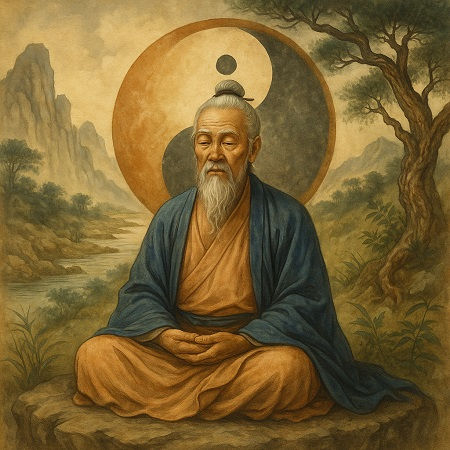
IFS begins with the assumption that every part has a positive intention, no matter how extreme its behavior. There are no bad parts, only ones who’ve taken on painful burdens or misunderstood roles. Taoism echoes this in its rejection of black-and-white morality. It teaches that opposites live within each other: strength in softness, light in darkness, action in stillness. The yin-yang symbol reflects this truth, everything belongs.
In both approaches, healing happens not by exiling or attacking what we dislike, but by turning toward it with respect. When we stop trying to dominate our internal world, parts often soften on their own. In Taoist terms, nothing is forced. In IFS, everything is welcomed.
Core overlap #2: Trusting the Self — the inner Tao
At the center of IFS is the Self, a calm, clear, compassionate inner leader. It’s not a part, not a persona, and not something we have to create. It’s what remains when parts are unblended. It leads not with pressure, but with presence.
In Taoism, the Tao itself cannot be defined or grasped, but when we are in harmony with it, things flow. The Self in IFS feels remarkably similar. It isn’t controlling, but things shift around it. It isn’t loud, but it brings coherence.
As Lao Tzu writes, “The Master doesn’t talk, he acts. When his work is done, the people say, Amazing: we did it all by ourselves.’”
This is how the Self operates in therapy, and in life.
Core overlap #3: Wu wei and the healing stance
Wu wei means “non-doing,” but not in the sense of apathy or passivity. It means acting in alignment with natural rhythms, not in opposition. It’s the art of not forcing — and letting things unfold as they are ready.
IFS sessions flourish in this space. The therapist does not push the system. The client is not asked to hurry or override. Instead, healing is invited. The client builds relationship with parts. The Self emerges gradually. Protectors step aside when they feel safe — not when they are told to. And as in wu wei, the more gently things are held, the more freely they begin to move.
A model and a path
For many people, IFS starts as a model, a method of understanding their internal world. But over time, it becomes a path. A way of living. A way of listening. And for those drawn to Taoism, it’s often a short step to seeing that path as sacred. Taoism gives language to what IFS clients are already experiencing: a deeper quiet inside. A center that doesn't need to fight. A return to flow.
Final reflection
IFS and Taoism do not need to be stitched together. They are already woven from the same thread. One offers a map of the inner world; the other offers a way of walking it. Together, they invite us to approach healing not as a battle, but as a returning.
This series of blogs will explore that shared terrain, the philosophy, the practice, and the lived experience of blending these two rich traditions. Whether you are a therapist, a seeker, a survivor, or simply someone longing to lead yourself more gently, you are welcome here.
This is where the Way meets the Self. And it begins not with effort, but with presence.
Comments