🦋Module 5 — Telling Your Life Story | Legacy Projects for the Dying Course
Updated: 8 hours ago
Free Course by Everything IFS Academy | Death and Dying Series
Help us reach the people who may need this most by sharing this free course with friends, family, colleagues, online communities, social media or on your own website.
🎧 Audio – Listen on the go
🦋Module 5 — Telling Your Life Story
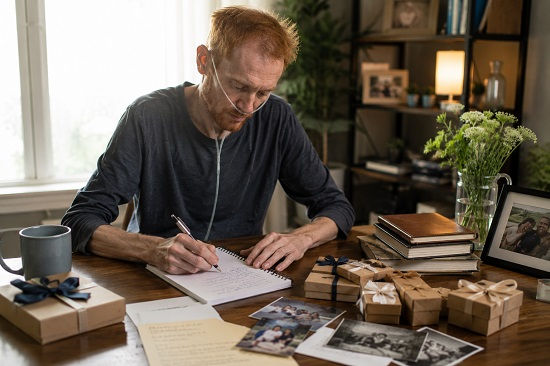
Every person carries one possession nobody else has a copy of: the whole story, from the inside. This lesson is about getting that story out where the family can keep it, and it teaches every workable format: the question framework that came out of palliative care research, the recorded interview, the slow one-question-a-week model, the memoir built from fragments, and the shoebox of photographs used as a key. It also begins with something that surprises most people: the strongest reason to tell the story is not the record it leaves. It is what the telling does for the teller.
Why Telling the Story Helps the Teller
Late in life, and especially near the end of it, something in people turns back and starts walking the whole road again. Clinicians call it life review, and it is not avoidance or living in the past; it is one of the natural tasks of dying, the mind gathering a life into a shape and asking whether it added up to something. Legacy storytelling gives that task somewhere to go.
This is the most researched corner of legacy work, and the findings deserve honest telling. In the early 2000s, the Canadian psychiatrist Harvey Chochinov and his colleagues built a brief therapy around exactly this: a guided session or two in which a dying person tells the parts of their life that mattered most, with the telling recorded, transcribed, and shaped into a document for the family, a document the researchers called a generativity document, meaning a record made to hand the self forward to the generations that follow. They called the approach dignity therapy, and when they studied it across hundreds of terminally ill patients, the pattern held again and again: people who did it reported a heightened sense of meaning and purpose, a strengthened sense of dignity, and for many, eased suffering and a firmer feeling that their life had mattered and would keep mattering. Families, for their part, treasured the documents and said so for years afterward.
The careful way to say what this means: telling the story, with someone receiving it, does real work on the teller. It converts a life from a blur into a testament. None of the formats below require a therapist or a study; they are the same act, available at any kitchen table.
The Dignity Therapy Questions, Adapted
Dignity therapy's most portable gift is its question framework, the short list of questions Chochinov's team used to draw a life out of a person. Adapted for use at home, self-guided or asked by a loved one, the working set looks like this. Any one of them can fuel an entire session, and nobody should attempt them all in a sitting.
Tell about your life, especially the parts you remember most or that matter most. The opener, deliberately wide. People do not begin at birth; they begin where the heat is, and that is the point.
When did you feel most alive? The single best question in the set. It skips the resume and goes straight for the marrow, and its answers are almost never what the family would have guessed.
What are you proudest of? With the gentle follow-up the original protocol understood: pride does not have to mean accomplishment. People name marriages held together, hard years survived, a child raised right.
What are the most important roles you have played? Parent, friend, foreman, caretaker, the funny one. Roles unlock stories that achievements hide.
What have you learned about life that you would pass on? The wisdom question, and the bridge to the ethical will taught in its own lesson earlier; many people discover their legacy letter while answering it out loud.
What do you hope for the people you love? The closing question, and the one that turns a history into a gift, because it points the whole telling forward.
The craft note that makes the framework work: these are starting doors, not a checklist. The teller follows whichever door opens warm, and the asker's whole job is the follow-up question, "what happened next," "who else was there," "how old were you." A session is one or two doors walked all the way through, not six doors glanced into.
The Recorded Interview
The single most effective format for most people is not writing at all. It is a conversation: one loved one asking, one person telling, a phone recording, forty unhurried minutes. This is the model proven at enormous scale by StoryCorps, the oral history project that has recorded hundreds of thousands of ordinary people interviewing each other, usually family, and archived the conversations in the Library of Congress, the largest collection of human voices ever gathered. Their core discovery is the one that matters here: almost everyone tells their story better to a person than to a page or a lens. A face that loves the stories pulls them out; questions keep the thread moving; and the listener's laughter and follow-ups end up on the recording too, which families later count as half the treasure.
Running one at home takes three decisions.
First, the interviewer: someone who already loves the stories and wants the details, because hunger in the asker is what makes a teller expansive; a grandchild who has heard the war stories a hundred times and still leans in is the perfect hire.
Second, the questions: a short list prepared in advance, drawn from the adapted framework above or from the StoryCorps great-questions tradition, things like how did you meet, what was your mother like, what are you proudest of, is there anything you have never told me that you want to tell me now.
Third, the setting: a quiet room, the phone on the table recording audio (video if wanted, but audio alone removes all self-consciousness), and a hard stop around forty-five minutes, because storytelling is genuine work and stopping while it is still good is what makes a second session happen. The technical side, files, backups, and where recordings live, is owned by the Voice and Video Recordings lesson and handled there.
Arthur, eighty-one and adamant that his life was "nothing worth taping," sat for one session because his granddaughter asked the question her father suggested: "Tell me about the day you arrived in this country with eleven dollars." Ninety minutes later they had the whole crossing, the rooming house, the first job, and the proposal to her grandmother, and Arthur, who had refused a microphone his entire life, asked when they were doing the next one. The interview format works because it does not feel like making a record. It feels like being asked.
One Question a Week
For people working with months rather than weeks, there is a slower format with its own advantages: one question at a time, answered whenever energy allows, accumulating into a full account. This is the model behind the popular subscription services that email a storyteller one prompt a week for a year and bind the answers into a printed book at the end, and those services are a fine option for families who want the structure handled.
But the model itself is free, and a family can run it with nothing but email or a notebook. One person plays editor: each week they send or hand over a single question, from the frameworks above or their own curiosity, and the teller answers in whatever form is easiest that week. Typing. Dictating to a phone's voice-to-text. Talking into a voice memo and letting a grandchild transcribe it. Handwriting on the good days. The editor keeps the answers in one place, in order, and that growing folder is the book, whether or not it ever visits a printer.
The format's quiet strengths: it fits fluctuating energy, since a bad week simply rolls the question forward; it produces depth no single interview reaches, because fifty questions cover a life the way one afternoon cannot; and the weekly question itself becomes a thread between the teller and the editor, a standing reason to be in touch that both will remember. Nadia ran this for her father by text message, one question every Sunday night, and his Tuesday-morning voice memos back, rambling, funny, occasionally devastating, became a family archive seventy entries long. He answered the last one nine days before he died. It asked what he hoped for her, and he was ready for it, because sixty-nine questions had warmed him up.
Memoir in Fragments
Some people want to write the story themselves, and immediately get crushed by the same boulder: the book. Chronology, chapters, completeness, the whole life in order. Hardly anyone has the energy for that book, and here is the liberating truth this section exists to deliver: nobody needs it. A pile of true fragments is a memoir. Binding is optional.
The fragment method drops chronology entirely and captures scenes, one at a time, in any order, at any length. The day the barn burned. What Sunday mornings smelled like in 1954. The teacher who changed everything, in two paragraphs. Each fragment is its own complete project, finishable in one sitting, which is precisely what the choosing lesson's sizing wisdom calls for. Tired hands dictate instead of writing; voice-to-text on any phone turns talking into typed pages, mistakes and all, and the mistakes can stay. The fragments live in one notebook or one document, and the pile grows in whatever order memory serves it up, which is never chronological and never should be.
Two craft notes carry the method. Write scenes, not summaries: "my father was a hard man" is a summary, but "my father once drove ninety miles to return a dollar he was overpaid, and made me come along to watch" is a scene, and scenes are what the grandchildren will read aloud to their own children. And let the list lead: ten minutes spent jotting fragment titles, just titles, "the dollar trip," "Aunt Ruthie's piano," "the night shift years," produces a menu that makes every future sitting easy, because the blank page is gone forever; there is only the menu and a pen. Frank, a retired machinist, wrote forty-one fragments over his last five months, none longer than a page, the last few dictated. His daughter had them spiral-bound at an office store for nine dollars. At the funeral, people read from it like scripture, and nobody once noticed it had no chapters.
Photographs as Story Keys
The last format requires no questions at all, because the prompts already exist in a shoebox in the closet. Photographs are the most powerful story keys there are: a single image reliably unlocks names, years, whole afternoons that no question would have found, because the memory is attached to the picture the way scent is attached to a kitchen.
The format is simple and it is one of the gentlest bed projects in this course. The box or album on the lap. A loved one alongside with a phone recording audio. And the person simply goes through, picture by picture, saying whatever each one wakes up: who that is, where that was, what happened right after the shutter clicked. The recorder catches it all, and an hour produces both a told history and the identifications that make the photographs themselves a legacy. Pearl, ninety, narrated her way through three shoeboxes across four Sunday afternoons while her grandson recorded, and the sessions kept doubling: the family got the stories, the photos got their names, and Pearl, by her own account, got the four best Sundays of her year, because for those hours she was not being cared for; she was the only one in the room who knew everything.
The work of organizing, labeling, and preserving the photographs themselves is its own full project with its own lesson ahead, Photographs and Family History, and everything about sorting and saving them is taught there. Here the photographs serve their other purpose: keys, turned one at a time, in the company of someone holding a recorder and asking nothing more than "who's that?"
Disclaimer: Everything IFS Academy is an independent educational platform and is not affiliated with, endorsed by, or connected to the IFS Institute. While we strive for accuracy, errors can occur, and users are encouraged to cross-reference critical information. These courses, lessons, skills, and practices are offered for educational and self-reflection purposes only. They do not constitute therapy, mental health treatment, clinical training, or crisis support, and they should not be used as a substitute for professional mental health care.
Crisis Support: 🚨 If you are experiencing a mental health crisis, feel unsafe, feel at risk of harming yourself or someone else, or feel too overwhelmed to safely use self-directed practices, please pause this material and reach out for immediate support. Contact a licensed mental health professional, call or text 988 in the U.S. or Canada, or use your local emergency or crisis resources.


Comments