🦋Module 1 — What Are Legacy Projects? | Legacy Projects for the Dying Course
Updated: 8 hours ago

Free Course by Everything IFS Academy | Death and Dying Series
Help us reach the people who may need this most by sharing this free course with friends, family, colleagues, online communities, social media or on your own website.
🎧 Audio – Listen on the go
🦋Module 1 — What Are Legacy Projects?
There is a question that arrives, sooner or later, for almost everyone who knows their time is growing short: what will I leave behind? Not in the lawyer's sense, not the house or the accounts, but the real question underneath it. What of me stays? This course is a long, warm answer to that question. It is a library of legacy projects, the things a dying person can make, record, write, give, plant, and set in motion while they are still here to do it, each one taught fully in its own lesson, with what it is, why it matters, what it asks of the body and the calendar, and how to actually begin. This first lesson does the orienting. It explains what a legacy project is, who this work truly serves, where the practice comes from, and what is waiting in the lessons ahead.
What a Legacy Project Is
A legacy project is a deliberate act of leaving something behind. Words, a voice, a story, an object with its meaning attached, a kindness set loose in the world. The key word is deliberate. Everyone leaves traces; a legacy project is a trace left on purpose, shaped by the person it came from, made while they are still here to make it.
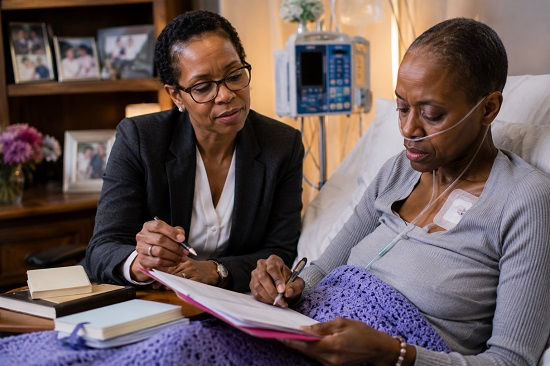
That deliberateness is what separates a legacy project from the ordinary clutter a life sheds. A drawer of photographs is a trace. Ruth, sitting up in bed with that drawer in her lap, choosing the fifty photographs that matter and saying who is in each one, is making a legacy. A laugh is a trace. Marcus, letting his granddaughter record two minutes of him telling the story he always tells wrong on purpose, is making a legacy. The raw material was already there. The act of choosing it, shaping it, and handing it forward is the project.
Legacy projects come in every size and every medium. Some are written, like a letter of values meant to be read for generations. Some are spoken, recorded in the person's own voice. Some are made by hand, or chosen from a lifetime of belongings, or cooked. Some live outside the family entirely, as a tree, a scholarship, a skill taught to someone who will carry it on. Some take an afternoon. Some take ten minutes and can be done flat on one's back. The lessons ahead open each family of projects one at a time, and there is no level of illness, energy, or artistic talent that closes the door on all of them. Something in this course is doable from any bed.
Who Legacy Work Is Really For
The obvious answer is the people left behind, and that answer is true. Families keep these things with a devotion that surprises people who have never grieved. The recording gets played on hard nights. The recipe card in familiar handwriting gets framed. The letter gets read at milestones for decades. Anyone who has worked around dying for long has watched a family treasure some small, imperfect made thing far above anything the person owned.
But the less obvious answer matters just as much: legacy work is for the person making it. This is not a hopeful guess; it has been studied. When researchers in palliative care, led by the Canadian psychiatrist Harvey Chochinov, began guiding dying patients through telling their life stories and shaping the telling into a document for their families, the people who did it consistently reported something striking. A stronger sense of meaning and purpose. A firmer sense of dignity. Less distress. The feeling, named again and again, that their life had mattered and would go on mattering. Hospice teams see the same thing outside any study: a person engaged in legacy work often becomes, for that hour, not a patient but an author, a teller, a giver. The work hands a person back their own agency at a time when illness keeps taking it.
So this course is written to the dying person first. Family members, caregivers, and companions will find it just as useful, and many of these projects are done with other hands helping. But the seat of honor here belongs to the one doing the leaving.
A Legacy Does Not Have to Be Large
The word legacy carries some unhelpful baggage. It sounds like buildings with names on them, like fortunes and followings, like a public mark. That version of legacy convinces many ordinary people that legacy is not for them, that they did not do enough, build enough, or get known enough to leave one. It is worth saying plainly that this is backwards.
The legacies that actually hold families together are almost never the grand ones. They are a voice saying an ordinary sentence. A pound cake recipe with a thumbprint of old butter on the card. A note inside a toolbox lid explaining where the dented hammer came from. The story of how the grandparents really met, told by the only person who was there. These small things outlast monuments because they do something monuments cannot: they carry the person, not just the name. A man like Tomás, who drove a delivery route for thirty years and raised three kids and never once made the newspaper, has exactly as much legacy to leave as anyone who ever lived, and the people who love him would trade every famous monument on earth for ten minutes of his voice. This entire course is built on that truth.
Where This Practice Comes From
Leaving something behind on purpose is as old as dying itself, but the practice taught in this course has a few honest streams of history worth knowing, because they explain why the work looks the way it does today.
The ethical will. The oldest stream is a Jewish tradition, centuries deep, with roots reaching back to the deathbed blessings of Genesis: a dying person setting down not their property but their values, lessons, and hopes for the people who remain. The tradition was rediscovered and renamed in modern times, and it now thrives well beyond any one faith. It has its own full lesson in this course, because it earned one.
Dignity therapy. In the early 2000s, Harvey Chochinov and his colleagues built a formal practice around guided life storytelling for the dying, producing what they called a generativity document for the family. Their research did something important for all legacy work: it demonstrated, in studies rather than sentiment, that this work eases the dying person, not only the bereaved.
Hospice legacy programs. Over the same decades, hospice teams, art therapists, and music therapists quietly built a craft tradition at the bedside: hand molds, fingerprint keepsakes, recorded heartbeats, memory books made in hospital rooms. Much of the practical knowledge in this course comes from that tradition, learned one bedside at a time.
The death doula movement. Most recently, end-of-life doulas have made legacy work a centerpiece of non-medical dying care, sitting with people through exactly the kinds of projects this course teaches.
No single founder invented this. It is a practice with many parents, and this course gathers what they collectively know.
An Invitation, Never an Assignment
One more thing belongs in this first lesson, and it matters. Legacy work is an invitation. It is not a duty, not a test of love, and not one more task on the long list illness already imposes. Some people take to it hungrily. Some want one small project and no more. Some want none at all, and that is a complete and honorable answer; a life is a legacy whether or not anything gets recorded. People also commonly find that this material stirs more feeling than expected, sometimes in the middle of an ordinary paragraph. Setting it down and coming back another day is a perfectly good way to read this course. The lessons will keep.
A Map of What's Ahead
The rest of this course opens the legacy library one family of projects at a time.
The choosing lesson comes first, because it serves every project after it.
Choosing and Shaping Your Legacy Project is how to match a project to the person, the people it is for, and the energy honestly available, including projects sized for a bed.
The written legacies come next.
The Ethical Will and the Legacy Letter is the classic document of values, lessons, love, and blessings, the most established legacy project there is.
Letters and Messages for Future Moments are letters written now to arrive later, at weddings, birthdays, and hard days.
Then the story legacies.
Telling Your Life Story is life review in every workable form, from recorded interviews to one question a week.
Voice and Video Recordings is everything a microphone and camera can save, from bedtime stories to a recorded heartbeat.
Photographs and Family History is naming the people in the photos and keeping the family's visual memory findable.
Then the legacies of hands, home, and belongings.
Recipes, Food, and Family Traditions is the family table written down, from the famous dishes to the holiday rituals.
Handmade Keepsakes is the made and bodily keepsakes, from handprints and handwriting to quilts cut from chosen clothing.
Heirlooms, Belongings, and Gifts for the Future is passing on what is already owned, with the stories attached and the giving done in person.
Then the legacies that face outward.
Words of Repair and Reconciliation is the saying of what still needs saying, including when reconciliation is not possible.
Living Legacies is the legacy that keeps acting in the world: trees, gardens, scholarships, gifts, and skills taught forward.
Your Digital Legacy is rescuing the photos, messages, and accounts that live on phones and in clouds, and deciding what becomes of them.
Your Farewell in Your Own Words is authoring the goodbye itself, from a self-written obituary to the song chosen on purpose.
And the closing lesson draws it together.
Putting Your Legacy Plan Together is the judgment work: what to do first when time is short, how one good hour can feed several legacies, and how to let done be enough.
Every project named here gets its full teaching in its own lesson. Begin anywhere that calls.
Disclaimer: Everything IFS Academy is an independent educational platform and is not affiliated with, endorsed by, or connected to the IFS Institute. While we strive for accuracy, errors can occur, and users are encouraged to cross-reference critical information. These courses, lessons, skills, and practices are offered for educational and self-reflection purposes only. They do not constitute therapy, mental health treatment, clinical training, or crisis support, and they should not be used as a substitute for professional mental health care.
Crisis Support: 🚨 If you are experiencing a mental health crisis, feel unsafe, feel at risk of harming yourself or someone else, or feel too overwhelmed to safely use self-directed practices, please pause this material and reach out for immediate support. Contact a licensed mental health professional, call or text 988 in the U.S. or Canada, or use your local emergency or crisis resources.


Comments