Excoriation Disorder (Skin-Picking Disorder)
Updated: Jul 15
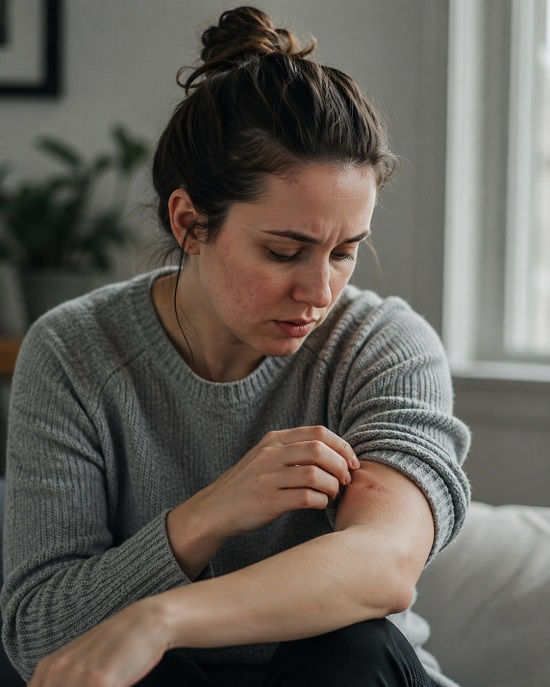
Excoriation Disorder (Skin-Picking Disorder): A Clear, Compassionate Guide
Whether it's you, someone you love, or something you're here to learn about, this page outlines what excoriation disorder actually is, in plain terms, with no judgment.
Read this page straight through or scroll to the part you need. There's no right or wrong way to take it in. One quick note before we go further. At the very bottom of this page you'll find a Further Help and Resources section specifically for Excoriation Disorder which are not read aloud here so make sure you scroll down to check them out.
Excoriation disorder is a recognized mental-health condition, not a verdict on who anyone is. It is more common than people realize, it is treatable, and no one who has it is the first to walk this road.
1. What Is Excoriation Disorder (Skin-Picking Disorder)?
Excoriation disorder, also called skin-picking disorder, is a recurring pattern of picking at one's own skin to the point of damage, where the picking is hard to stop and keeps returning despite real efforts to cut back, and where it causes distress or gets in the way of daily life.
Everyone picks at their skin sometimes. This is something else. Worrying at a rough spot or a blemish now and then is ordinary. What marks the disorder is picking that becomes hard to control, causes real damage, takes up meaningful time, and keeps coming back despite genuine attempts to stop, with distress wrapped around the whole thing.
It is a recognized diagnosis, not a bad habit. Excoriation disorder is defined in the DSM-5, the manual clinicians in the U.S. use to describe mental-health conditions, and it is recognized worldwide in the ICD-11. It was once most often called dermatillomania, and it was named as its own distinct condition only relatively recently, which is part of why so many people who live with it have never heard it has a name. It belongs to a group of what are called body-focused repetitive behaviors, alongside compulsive hair pulling, and it sits near OCD in how it is classified.
It is not vanity, and not ordinary grooming. A common misread is that this is fussing over looks. For many people the picking is driven by tension, by a sense that something needs to be smoothed or fixed, or by a soothing, almost trance-like pull, rather than by wanting to look a certain way. The relief is brief, and the damage and distress that follow are real.
What it is not. It is not a lack of willpower, and not simply a matter of needing to stop. Wanting to stop and being unable to is the condition itself, not a character flaw. It also is not the same as self-harm in the way that term is usually meant, even though it can look that way from the outside. Excoriation disorder sits among health conditions, not among judgments about who a person is.
How common it is. This is one of the most under-recognized conditions there is, kept quiet by shame and by how little it gets talked about. It is far more common than most people realize. It reaches people across every background and walk of life, often begins around adolescence, and while it is reported more often in women, it reaches men too. Whatever brought you here, you are in very large and very ordinary company.
2. The Symptoms
Excoriation disorder shows up as picking that resists control, the pull that drives it, the marks it leaves, and the life that quietly gets arranged around hiding it. The signs tend to fall into a few areas. Most people relate hard to some and not at all to others, and that is completely normal.
The Picking That Won't Stop (the core)
Picking that causes real damage. Repeated picking at the skin, often the face but also the arms, hands, or anywhere else, to the point of sores, scabs, or scarring.
Trying to stop, and not quite managing. Real, repeated attempts to cut back that do not hold, which can be quietly discouraging.
A focus that takes over. Picking that goes on for long stretches, sometimes without the person fully registering how much time has passed.
The Pull Underneath It (what drives the loop)
Tension before, relief during. A building pressure or urge that the picking briefly releases, which is part of what makes it so hard to stop.
An automatic, trance-like pull. Picking that happens half-consciously, while watching a screen, reading, or lost in thought, the hands moving almost on their own.
Reaching for it to manage a feeling. Picking that ramps up with stress, anxiety, boredom, or other big feelings, becoming a way to soothe or discharge them.
What It Leaves Behind (the aftermath)
Skin damage and its toll. Sores, scarring, and sometimes wounds that need real care.
Shame that lands hard. Guilt, embarrassment, or disgust once an episode passes, often heavier than the picking itself.
The private vow, then the return. A promise to stop, then the cycle coming back, then the self-blame stacking a little higher.
The Life Built Around Hiding It (the narrowing)
Covering and concealing. Makeup, clothing, or avoiding bright light to hide the marks, with the effort quietly mounting.
Pulling back from people. Skipping plans, photos, or anything that might put the skin on display.
Time lost to it. Hours that go to the picking and to managing its aftermath.
The parts that rarely make the list. Some experiences come up again and again in people's own accounts even when no checklist names them: how genuinely automatic it can be, so the damage is done before you notice; the deep shame that keeps it hidden for years, often even from doctors; the relief of learning it has a name and is a known condition; and how often it travels alongside other body-focused behaviors like hair pulling.
A word on the skin itself. Because this condition lives partly on the body, the wounds are real. If picking leads to a sore that will not heal, signs of infection, or damage that worries you, that is a reason to see a doctor, and there is no shame in it. Caring for the skin is part of caring for the whole picture.
No one has all of these. This is not a test anyone passes or fails. Relating to some and not others does not make the picture any less real. And recognizing these patterns is information, not a diagnosis. It is exactly the kind of thing worth bringing to a professional, because only a qualified professional who sees the whole picture can assess any one person.
3. How Did I Get This?
Early on, a quiet question tends to surface: what did I do to cause this? Here is the honest answer the research gives.
There is no single cause. What the evidence shows instead is a handful of forces that combine differently in every person, most of them in place long before the picking ever became a problem.
Genetics and family history. Body-focused behaviors tend to run in families, and a real share of the risk appears to be inherited. A person can carry that loading without ever having known it was there.
Brain and biology. The systems involved in habit, urge, and the drive to self-soothe work differently from person to person, and in these conditions the body finds genuine relief in the behavior, which is part of why it takes such hold. That is biology, not choice.
Temperament. Some people feel tension or emotion more intensely, lean toward perfectionism, or find restlessness hard to sit still with. That sensitivity is not a defect, and it often travels with real strengths.
Stress and environment. Stress, early hardship, and long stretches of tension can all feed in and tend to make the picking ramp up. No one authors the world they came up in.
No one knows the exact recipe, and the science is still developing. What is clear is the shape of it: several contributors stacking up, not one switch flipped.
The part that matters most. This is not weakness, not vanity, and not something anyone chose. The old idea that a person could simply stop if they wanted to is not what the research describes. It describes a health condition with real, traceable contributors, the kind a person can have without it meaning anything about their worth. Putting that weight down is often where the room to actually move first opens up.
4. Treatment and Finding the Right Help for Excoriation Disorder
Here is the part worth hearing plainly: there is far more help for skin picking than the old picture suggests, and it works in more different ways than most people expect. This is not one narrow road with a single gate. It is a set of doors, and a real part of finding steady ground is finding the one, and the professional, that fit.
A few honest words first. This condition is under-recognized, and many people carry it for years in silence, sometimes without ever telling a doctor. Clinicians who specialize in it are not on every corner. None of that means it is unfixable. It responds to focused work, and the goal is not flawless skin or a promise of never again. It is steadier control, skin given room to heal, and the behavior far less in charge of the day.
The behavioral approaches are the heart of it, and some were built for exactly this. Skin picking sits near OCD in the manuals, but it does not run on the same engine of fear and compulsion, so the exposure-based work that defines OCD treatment is not the center here. The approach with the strongest track record for body-focused behaviors is habit reversal, which builds awareness of when and how the picking happens and trains a competing action to reach for instead. It is often delivered inside a broader comprehensive behavioral approach designed specifically for these behaviors, one that maps the settings, feelings, thoughts, and sensations that feed the loop and tailors the plan to them. Acceptance-based work, which helps a person let an urge rise and pass without acting on it, is frequently folded in alongside it.
For picking driven by hard feelings, skills help. When the picking rides on stress, anxiety, or emotion, learning to ride out an urge and steady a feeling can take real pressure off the loop.
► Free DBT Course - Click Here
Medical and prescriber care is one of the doors, in two senses. On the mental-health side, no medication treats skin picking itself, and there is none approved specifically for it. A prescriber may still help where other conditions ride alongside, which is a conversation to have with someone who knows the full situation. On the physical side, skin that has been damaged sometimes needs real medical attention, and a doctor or dermatologist is the right call for that. Medication of any kind is a prescriber's call, never something to start, stop, or change on a hunch.
An IFS angle. Internal Family Systems, or IFS, is a way of working with the different parts of a person. It does not treat skin picking as the enemy. It meets the part that does the picking as something that has been trying to soothe, to release tension, or to manage a feeling the only way it knew how, and it works with that part rather than forcing it into silence. For many people, meeting that part with curiosity instead of war is where some of the pressure finally eases.
► Free IFS Course - Click Here
You are not the only one. Communities for people who pick, and for body-focused behaviors more broadly, exist and are genuinely good. Hearing your own private experience described out loud by someone else can be its own kind of relief. If one group or format does not fit, that says nothing about whether support is for you. It just means that room was not the one. Several reputable communities, including free online groups, are listed at the bottom of this page.
What to actually search for. Because few therapists advertise skin picking by name, widen the search. Look for someone who treats OCD and related disorders or body-focused repetitive behaviors, and ask directly whether they use habit reversal or the comprehensive behavioral approach. Two questions cut through quickly: do you treat skin picking or other body-focused behaviors specifically, and what does that work actually look like week to week. Because specialists are relatively scarce, telehealth is worth considering, since it widens the pool well beyond your immediate area.
Fit isn't failure. The approach everyone around you swears by may not be the one that clicks, and that is not a personal failure. It is information pointing toward the one that will fit better, and fit can change over time. To explore the different approaches a therapist might use in session, you can look here:
For a full walkthrough on finding and vetting a therapist, see the Finding a Therapist guide in the resources below.
5. What's Next?
The condition is treatable, and none of it has to be solved this week. Large numbers of people with this diagnosis go on to build steady, full, ordinary lives, with the picking far less in charge and the skin given room to heal, and a great many of them once stood exactly where you might be standing now, unsure it was even possible.
The diagnosis is best held as information, not identity. Something a person has, not something they are.
In the early going, the steps that help most are small and concrete. You only need to pick one. The point is simply to begin, and there are more doors than most people realize:
Doctor or therapist — the safest, most private place to start.
A peer support group — a local one if there's such a group nearby, or one of the free online communities for skin picking.
Clergy member — a pastor, priest, rabbi, imam, or other faith leader, if you're religious. Often a trusted, confidential ear.
School counselor or a trusted teacher — if you're in high school or college. Campus health and counseling centers are usually free or low-cost.
Employee assistance program (EAP) — if your workplace has one, a confidential service, often free, separate from the rest of work.
One trusted person — so the weight isn't carried entirely alone, if and when that feels right.
A quiet week where the only thing managed was not giving up still counts. Gentle and steady tends to outlast urgent and forced.
Just below, you'll find the Further Help and Resources section: communities, helplines, tips, and pathways worth coming back to.
Further Help & Resources
Everything below is here when you're ready, and not before.
Picking Me Foundation (the skin-picking-specific nonprofit, with a free online support group and plain-language education)
International OCD Foundation: Body-Focused Repetitive Behaviors (clear overview, plus tools to find a therapist or support group for skin picking)
The TLC Foundation for BFRBs: Support Group Directory (free, peer-led groups, many with virtual options)
See why so many people are turning to IFS therapy for help...
Disclaimer:
Everything IFS Academy is an independent educational platform and is not affiliated with, endorsed by, or connected to the IFS Institute. While we strive for accuracy, errors can occur, and users are encouraged to cross-reference critical information. These courses, lessons, skills, and practices are offered for educational and self-reflection purposes only. They do not constitute medical advice, diagnosis, therapy, mental health treatment, clinical training, or crisis support, and they should not be used as a substitute for professional medical or mental health care. Only a qualified professional who knows your situation can diagnose, treat, or advise you, and nothing here should be used to make decisions about starting, stopping, or changing any treatment or medication.
Crisis Support:🚨
If you are experiencing a mental health crisis, feel unsafe, feel at risk of harming yourself or someone else, or feel too overwhelmed to safely use self-directed material, please pause and reach out for immediate support. Contact a licensed mental health professional, call or text 988 in the U.S. or Canada, or use your local emergency or crisis resources.


Comments