🌌Free IFS & Astrology Course | Lesson 4 — The Houses and Angles as Life Areas
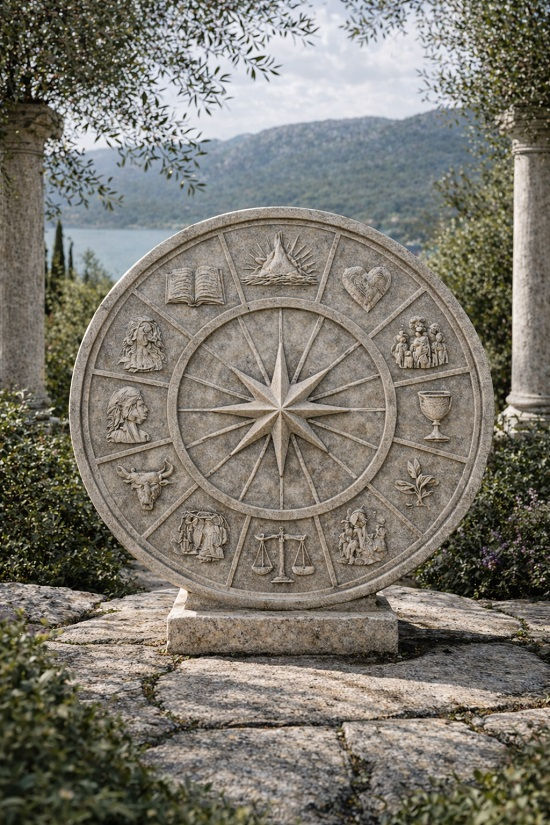
Lesson 4 — The Houses and Angles as Life Areas
What a House Is
A house is a life arena. A specific domain of human experience — relationships, work, home, creativity, money, spirituality, the body. Every chart wheel is divided into twelve of them, and together they map the entire territory of a human life.
A house is not a personality trait. It's not a planet. It's not a style. It's a place. A situational context. Think of it this way: planets are the actors, signs are the costumes they wear, and houses are the stages those actors perform on. Each house is a particular stage with its own terrain, its own weather, its own rules.
This is why the same planet-in-sign combination lands differently in two different charts. Put that combination in the house that governs career, and the energy plays out in public life. Put it in the house that governs home, and the same energy plays out in family territory. The planet and sign set the inner configuration. The house determines the venue.
Houses are where your chart becomes livable. They take the abstract inner wiring and locate it inside the specific rooms of your actual existence.
The Four Angular Houses
The twelve houses are not equally weighted. Four of them carry disproportionate significance because they sit at the chart's cardinal directions — the four quadrants marked by the horizon line and the meridian line of your birth moment. These are called the angular houses: the 1st, 4th, 7th, and 10th.
Angular houses orient the entire wheel. They're the compass points of a chart. Any planet sitting in an angular house gets amplified — which means its function becomes more visible, more embodied, more consequential in the person's actual life. A Venus in the 1st house, for example, is a person whose love and beauty function is right on the surface — people experience it on first contact, not after getting to know them. A Saturn in the 10th is a person whose discipline and authority function shapes their entire public life. Put the same planet in a non-angular house and the function is still there, but it operates in a more private register. Angularity means loud. Learn these four houses first, and everything else in the wheel starts organizing itself around them.
The 1st House — The House of Self. Naturally ruled by Aries and Mars. Traditionally called the house of self, body, and identity — the house of personality and first impressions.
The 1st house is where you meet the world and the world meets you — the single most personally orienting territory in the chart. This house governs your identity, your physical body, your appearance, your temperament, and the first impression people form of you before they know anything else. It's also where your Rising sign lives — the filter every experience passes through on its way into you and every expression passes through on its way out. The 1st house is your entrance into life: the doorway, the face, the way you show up in a room before you've said a word. People who know your 1st house before they know the rest of your chart often describe you one way; the rest of you only becomes visible as the relationship deepens. The 1st is the outer edge of who you are — the part of you that touches the world first.
The 4th House — The House of Home and Roots. Naturally ruled by Cancer and the Moon. Traditionally called the house of home, family, and ancestry — the house of the private self and the inner foundation.
The 4th house is the deepest, most private part of your chart — the buried foundation underneath everything else. This house governs your family of origin, your ancestry, your ethnic and cultural heritage, and the emotional climate you grew up inside. It also governs where you live in the most literal sense: your actual physical home, the walls around you, the space you return to at the end of each day. And it governs your inner life in its most private dimension — the self that exists when no one is watching, the version of you that only certain people (or sometimes no one) have ever seen. One of your parents lives here more strongly than the other (astrologers disagree about which, and the answer is often person-specific). The past lives here. What you come from lives here. If the 1st is how you arrive, the 4th is where you return when everything else is stripped away.
The 7th House — The House of Partnership. Naturally ruled by Libra and Venus. Traditionally called the house of marriage, partnership, and open enemies — the house of one-to-one relationships and the mirror of the self.
The 7th house is the direct mirror to the 1st — where self meets other. This house governs committed one-to-one relationships in all their forms: romantic partners, business partners, therapists, the closest friend who functions as a life companion. But the 7th carries a subtler teaching too: this is the house of projection, the place where you often see reflected in another person what you've disowned or underdeveloped in yourself. The partner who feels so complementary often carries exactly the qualities your own chart is quiet on. You don't just meet them. You meet a piece of yourself you've externalized onto them. The 7th is also, traditionally, the house of open adversaries — the people who stand across from you in opposition, whether in love, in court, or across a negotiation table. The common thread: anyone who is genuinely facing you. The 7th is the territory of the significant other, whoever that is in your life — ally or adversary, lover or rival, the person whose presence shapes you in contrast to itself.
The 10th House — The House of Public Life and Calling. Naturally ruled by Capricorn and Saturn. Traditionally called the house of career, reputation, and public standing — the house of authority and the visible outcome of a life.
The 10th house sits at the top of the chart, the most elevated and visible point — directly overhead at the moment of your birth. This house governs career, reputation, authority, and the role you become known for in the world. But the 10th is deeper than just a job. It's about what you're remembered for. What outlasts you. The mark you leave on the world beyond your private life. It also governs your relationship with authority itself — your bosses, governments, institutions, and traditional authority figures including (in many traditions) the parent who modeled public life for you. Your 10th house reveals how you position yourself relative to authority: whether you defer to it, resist it, embody it, or avoid it. Every chart has a direction it's reaching toward in public life, and the 10th is where that direction lives. If the 4th is your private foundation, the 10th is your public outcome — the visible result of everything the rest of the chart has been doing.
These four form an axis system — self versus other, private versus public. The 1st-7th axis is the horizontal line of your chart: how you arrive in the world and how you meet others inside it. The 4th-10th axis is the vertical line: what you come from and what you're building toward. Every chart pivots on these two axes. They're the skeletal structure the other eight houses hang from.
The Remaining Eight Houses, Grouped by Territory
The other eight houses fill in the terrain between the four cardinal points. Each one pairs naturally with one of the angular houses, sharing its thematic territory and extending its concerns into a different register. Organized this way, the whole wheel resolves into four clear domains — and each domain carries two houses that work as companions to its angular anchor.
The Material Domain — 2nd and 6th houses. These extend the tangible, practical territory of life that the 10th house anchors at the top. The 10th asks what do I build? The 2nd and 6th answer with what, and how, day after day.
The 2nd House — The House of Resources and Values. Naturally ruled by Taurus and Venus. Traditionally called the house of money, possessions, and values — the house of personal resources and self-worth.
The 2nd house governs your personal resources — the money you earn, what you own, what you consider worth having, and the underlying sense of self-worth that determines how much value you think you deserve. This is the house of your actual relationship with resources: whether you hoard or spend, whether you feel abundant or scarce, what you're willing to pay for and what you're not. It's also one of the most psychologically revealing houses in the chart, because what you value tells the truth about who you are in ways that stated beliefs often don't.
The 6th House — The House of Work and Daily Life. Naturally ruled by Virgo and Mercury. Traditionally called the house of work, service, health, and routine — the house of daily life and physical wellbeing.
The 6th house governs daily work, routines, habits, skills, and physical health. This is the territory of ordinary life — the tasks you repeat, the rituals that keep you functioning, the competence you build through showing up. It governs the body in its maintenance dimension (sleep, exercise, diet, illness) and work in its craft dimension (skills honed over time, service rendered to others). The 6th is the house of what you actually do with your days — and by extension, the kind of person those days are shaping you into.
The Social Domain — 3rd and 11th houses. These extend the territory of connection that the 7th house anchors, but in wider circles than one-to-one partnership.
The 3rd House — The House of Mind and Immediate Environment. Naturally ruled by Gemini and Mercury. Traditionally called the house of communication, siblings, short travel, and early learning — the house of the local world.
The 3rd house governs your immediate environment — siblings, neighbors, cousins, everyday conversations, short trips, and early learning. This is casual, close-range contact: the people you grew up near, the voices you hear most often, the mental environment you live inside. It's also the house of how you think out loud, process through conversation, and move through your local world. Most of daily life — texts, chats, errands, everyday information — lives here.
The 11th House — The House of Community and Hopes. Naturally ruled by Aquarius and Saturn (with Uranus as co-ruler in modern astrology). Traditionally called the house of friends, groups, and long-term hopes — the house of community and collective life.
The 11th house governs wider circles: friendships, groups, communities, collective causes, networks, and shared ideals. This is the house of your people beyond the intimate few — the friends you've chosen, the communities you belong to, the causes that call to you, the visions of the future you hold alongside others. It's where your individual life extends into collective life. The 11th is often where long-term hopes live, because hopes usually require a community to sustain them.
The Interior Domain — 8th and 12th houses. These extend the deep, private territory that the 4th house anchors. These are the most psychologically loaded houses in the wheel — the ones that govern what happens beneath the visible surface of a life.
The 8th House — The House of Depth and Transformation. Naturally ruled by Scorpio and Mars (with Pluto as co-ruler in modern astrology). Traditionally called the house of death, sex, shared resources, and the occult — the house of transformation and what lies beneath.
The 8th house governs shared resources, deep intimacy, and transformation. This is what happens when you merge with another person — financially, emotionally, sexually, psychologically. It's the house of joint finances, inheritance, taxes, debt, insurance, and anything else that involves combining your resources with someone else's. It's also the house of sexual intimacy at its depth dimension — not attraction (that's elsewhere), but the kind of merging that changes both people. And it's the house of psychological transformation: therapy, crisis, death and rebirth, the buried parts of the psyche that surface only under pressure. The 8th is where you cannot go alone — either because another person is involved, or because the terrain is too deep for the conscious mind to navigate by itself.
The 12th House — The House of the Unconscious. Naturally ruled by Pisces and Jupiter (with Neptune as co-ruler in modern astrology). Traditionally called the house of secrets, self-undoing, hidden enemies, and spiritual retreat — the house of the unconscious and the invisible.
The 12th house governs the unconscious, solitude, surrender, and the hidden realms — what lives beneath, behind, or beyond ordinary awareness. This is the house of dreams, meditation, spiritual retreat, institutions of seclusion (monasteries, hospitals, prisons), and everything you don't know about yourself until something brings it to the surface. It governs the parts of your life that happen away from the world — sleep, prayer, solitary creative work, illness, recovery. It's also the house of undoing — where the self dissolves into something larger than itself. Of all twelve houses, the 12th is the hardest to see clearly, because most of what it governs operates below the threshold of consciousness. But it's often where a life's deepest material lives.
The Expansion Domain — 5th and 9th houses. These extend the creative and meaning-making territory that the 1st house anchors — the places where your identity overflows into expression, and where your mind reaches toward what's larger than itself.
The 5th House — The House of Creation and Play. Naturally ruled by Leo and the Sun. Traditionally called the house of creativity, romance, children, and pleasure — the house of self-expression and joy.
The 5th house governs creative self-expression, romance, play, children, and the personal joy of making something. This is where identity pours out into creation — art, performance, sport, the hobby you love for its own sake, anything you make because making it feels like being yourself at your most alive. It's also the house of romance specifically, in the falling-in-love sense — flirtation, dating, the spark of new attraction, the thrill before the commitment. (Committed partnership is the 7th; the 5th is the falling.) And it's the house of children — not the abstract idea, but the specific creative life-force that children express and, for many people, literal children themselves.
The 9th House — The House of Meaning and Expansion. Naturally ruled by Sagittarius and Jupiter. Traditionally called the house of higher learning, philosophy, religion, and long-distance travel — the house of meaning and the wider world.
The 9th house governs higher learning, philosophy, long-distance travel, belief systems, and the search for meaning. This is where the mind reaches past its immediate environment (which was the 3rd house's territory) and into the larger questions — what does life mean, what's true, what's worth devoting oneself to. It's the house of the teacher and the student, the pilgrim and the scholar, the long journey both physical and intellectual. Religion and spirituality live here in their systematic dimension — not the mystical experience itself (that's the 12th), but the frameworks people build to make sense of existence. The 9th is where you widen your world.
Twelve houses. Four domains. Every zone of human experience accounted for — identity and body, home and ancestry, partnership and mirroring, career and public life, money and daily work, conversation and community, intimacy and the hidden, creation and meaning. Nothing left out. And nothing left over — every part of your life lands somewhere in the wheel.
The Four Angles
Alongside the houses, your chart has four special points — not slices, but precise locations — that carry enormous weight in chart interpretation. These are called the angles, and they're the four most sensitive coordinates in the entire wheel.
Each angle marks the beginning of one of the angular houses you just learned about. But the angle itself is different from the house. The house is a territory — a pie slice of the wheel. The angle is a single point: the exact degree where that house begins. The angle concentrates the house's themes into a single coordinate, which is why anything sitting right on an angle carries so much more weight than anything sitting inside the house in general.
The Ascendant (ASC) is the degree of the zodiac that was climbing above the eastern horizon at the exact moment of your birth. It marks the cusp of the 1st house. You already know this angle by another name — the Rising — and you already know it determines which sign filters every experience on its way into you and every expression on its way out. Section 2 of this lesson framed the 1st house as the territory of self; the Ascendant is the precise entry point of that territory — the pinpoint doorway, the first degree, the exact moment where your chart begins. It's the single most personally orienting coordinate in the entire wheel, which is why even a few minutes of birth-time difference can change which sign sits on the Ascendant and reshape everything downstream.
The Descendant (DSC) is the exact opposite point — the degree where the zodiac was setting on the western horizon at your birth. It marks the cusp of the 7th house. If the Ascendant is the doorway through which you enter the world, the Descendant is the doorway through which the other enters your life. This is the specific coordinate where partnership meets you — and also where projection lives. The sign on your Descendant often describes what you're drawn to in partners, what you find completing, what you've underdeveloped in yourself and tend to see in someone else instead. This is why committed relationships can feel so much like mirrors: your Descendant is your mirror, the precise point where what you're facing becomes visible. Unlike the Ascendant, which you grow into as yourself, the Descendant is what you grow into by meeting another person who reflects it back.
The Imum Coeli (IC) — Latin for bottom of the sky — is the lowest point of the chart, directly beneath the Earth at your moment of birth. It marks the cusp of the 4th house. The IC is the single deepest point in the entire wheel. Everything about the 4th house is concentrated here into one coordinate: the ancestral floor, the psychological foundation, the private self buried beneath everything the world sees. Many astrologers consider the IC the most unconscious point in the chart — the place where the oldest, most inherited, most unspoken material lives. It's the point that answers what am I built on? Most people can't articulate their IC directly; it operates below the threshold where language works. But it's always there, holding everything else up.
The Medium Coeli (MC) — Latin for middle of the sky — is the highest point of the chart, directly overhead at your moment of birth. It marks the cusp of the 10th house. The MC is the most elevated point in the wheel — the pinnacle, the point furthest from the unconscious IC and furthest into public visibility. This is the specific coordinate of your calling. Not just what you do for money, but what you're reaching toward as the visible outcome of your life. The sign on your MC describes the tone of your public identity, the style of your professional expression, and the kind of authority you're developing across a lifetime. Many astrologers treat the MC as the single most important point in the chart for understanding career direction — more revealing than the 10th house as a whole, because it's the precise degree where that entire arena begins. The MC is what the chart is climbing toward.
Together, these four form a cross at the center of the wheel. The horizontal axis runs from the Ascendant to the Descendant — self meets other. The vertical axis runs from the IC to the MC — foundation meets calling. That cross is the structural skeleton of the entire chart. When astrologers say a planet is conjunct an angle — sitting right on one of these four points — they're signaling that the planet carries major weight in how that person actually lives, because it's merged with one of the four most consequential coordinates in the wheel. The angles are where the chart concentrates. Everything else in the wheel takes its orientation from them.
Why Birth Time Matters, Now Fully Explained
You've now seen why birth time isn't a minor detail. Let's put the full mechanism in view.
The Earth rotates once every twenty-four hours. Which means the entire zodiac appears to rise, cross the sky, and set across a single day — all twelve signs passing overhead in that span. About every two hours, a new sign rises on the eastern horizon.
This rotation is what creates your Ascendant and your house structure.
Without a birth time, you can still calculate which signs the planets occupied at your birth — because planets move slowly relative to Earth's rotation, so their positions within the zodiac don't shift much within a single day. What you cannot calculate without a time is the exact rotational position of the horizon at your birth moment. Which means you cannot determine:
Which sign was rising (your Ascendant)
Where the MC and IC fell
Where the house cusps — the dividing lines between houses — landed
Which planets occupied which houses
All of that — which is most of what makes a chart personally readable — depends on time.
Consider two people born on the same day, in the same city, twelve hours apart. One at 6 a.m. One at 6 p.m. They share identical sign placements for every planet. Their Sun, Moon, Mercury, Venus, Mars, and all the others sit in the same signs. But their houses are completely different. Their Ascendants are different. Their career arenas, partnership patterns, home territory, and every other house-based life area have been reshaped entirely.
Even a few minutes can matter. A small time difference can shift the Ascendant from the tail end of one sign into the beginning of the next — which rotates every house boundary along with it, which moves planets across house lines, which changes which life arenas those planets actually activate.
This is why astrologers treat birth time as sacred data. A chart without a time is a chart with its life-area layer missing. You can still read the inner wiring — the signs and planets — but you can't see where any of it plays out. Time is what locates your chart inside your life.
You now understand the full structure of the wheel: twelve houses as life arenas, four angles as the chart's cardinal anchors, and the full reason birth time is the hinge the entire house system turns on. What remains is the final major layer — aspects, the geometric relationships that determine how all these planets, signs, and houses actually talk to each other.
Integration Practice
Somatic IFS Practice
Take a few moments to notice what this lesson opens in you around the four directions of a life: what you are building toward, what you return to, how you meet the world, and how you meet another.
Set a timer for 5 to 10 minutes.
Stand somewhere with a little space around you. Let the space in front of you represent public life and calling. Let the space behind you represent home, roots, and what you return to. Let the space to your right represent self. Let the space to your left represent other.
Begin standing in the center. Take one slow step forward and pause. Notice what happens in your body as you move closer to public life and visibility. When you are ready, step back to center.
Then take one slow step backward and pause. Notice what happens in your body as you move closer to home, privacy, and your roots. When you are ready, step back to center.
Then take one slow step to the left and pause. Notice what happens in your body as you move closer to other. When you are ready, step back to center.
Then take one slow step to the right and pause. Notice what happens in your body as you move closer to self. When you are ready, step back to center.
Keep it simple. Notice any shift in breath, posture, tightness, openness, heaviness, warmth, pressure, or impulse to move closer or pull away. If a part becomes more present in any direction, just notice that too.
When you finish, stand again in the center and notice which direction felt most charged.


Comments