👻Module 5: Offerings, Devotion, and the Art of Reciprocity | Deities, Ancestors, and Spirit Allies Course
Updated: Sep 29

Free Course by Everything IFS Academy Witchcraft Series
Help us reach the people who may need this most by sharing this free course with friends, family, colleagues, online communities, social media or on your own website.
🎧 Audio – listen on the go - (coming soon)
Module 5: Offerings, Devotion, and the Art of Reciprocity
An offering is not a bribe. Settle that first, because the modern habit of treating every exchange as commercial has slipped quietly into how many beginners think about deity work. They imagine the offering as payment, I give you this honey, you give me what I asked for, and the deity as a vendor with particular preferences. This misunderstands the gesture so completely that it produces relationships that never quite become relationships at all. The honey was supposed to buy something; when the something doesn’t arrive, the witch concludes the deity isn’t real, or the goddess is displeased, or the offering was wrong, and none of those conclusions touch what was actually happening.
What an offering actually is, in the understanding practitioners share across nearly every tradition, is an act of recognition, and its whole message is simple: you are seen, honored, and remembered. Gratitude given form: the witch’s way of saying the relationship is being attended to, the deity held in mind, the bond kept warm against the cooling every relationship undergoes untended. The deity does not need the offering in any material sense; a goddess of the harvest does not require a literal handful of grain to continue being herself. The offering is for the relationship, not for the result. Once that lands, everything else in this module becomes simple, and the relationship, paradoxically, often begins to produce exactly the kind of depth the transactional approach was trying and failing to purchase.
This is also the module where your practice gets its hands and its home. By the end you’ll know how to set up a small devotional space anywhere you live, with substitutions for every supply; what to offer, from a full pantry or an empty one; how to make an offering, step by step, words included; how often, and what to do with everything afterward, in a house, an apartment, or a dorm; and how the whole art sits inside the larger shape called devotion. Notebook out. This is the most practical lesson yet.
First, a Place: The Small Devotional Space
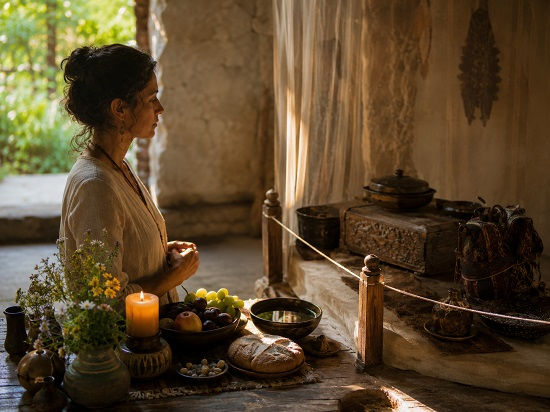
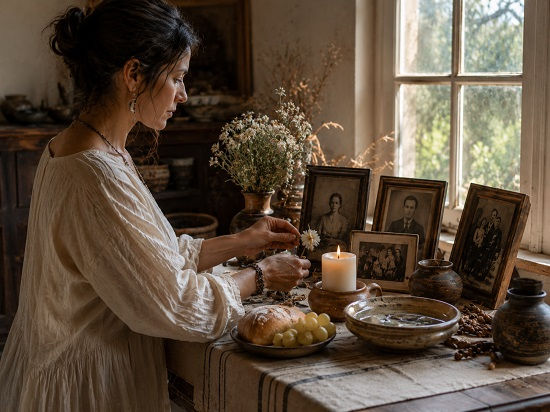
You’ve known since the opening lesson that an altar is a working surface and a shrine is a place of honoring, and you’ve been told twice that building one properly was a lesson ahead. This is that lesson, for deity work. What follows makes a simple, worthy devotional space for any figure you’re courting or curious about; the ancestor altar has beautiful customs all its own and gets its own full teaching later in this course.
Here is what practitioners commonly gather, with the honest truth beside each item: nothing on this list requires money, and every item has a substitute.
A surface. A shelf, a windowsill, the top of a dresser, even the lid of a sturdy box. Size is irrelevant; a devotional space the width of two hands is fully real.
A cloth. Any clean cloth that feels a little set-apart: a handkerchief, a scarf, a remnant. It marks the space as different from the dresser around it, which is its whole job.
A candle. A plain tealight is perfect and costs pennies. Where open flame isn’t safe or allowed, dorms, some rentals, homes with curious cats, an electric candle is a fully respectable substitute, and many practitioners in exactly those homes use one; the attention is the fire that matters.
A small cup or bowl. For water and other poured offerings. Any clean cup you set aside for the purpose; setting it aside is what consecrates it at this stage.
One token of the deity. A printed image, a postcard, a stone, a shell, a feather found on a walk, a symbol drawn by your own hand. Statues are lovely and entirely optional; the old cults themselves often honored a deity through the plainest of tokens.
Incense, if you like it. Optional everywhere, skippable in shared or smoke-sensitive homes without any loss of standing.
Setting it up takes ten minutes. Choose the spot, somewhere you pass daily if possible, since a space you see is a space you tend. Clean it well and plainly; for a beginner, honest cleaning is consecration enough, and the deeper consecration rites of specific traditions can come later if your path grows into them. Lay the cloth, set the token toward the back, place candle and cup before it, and greet the space once aloud, in your own words or these:
“This small place is set aside. What’s done here is done with attention.”
For the witch in a shared home where this would raise questions she doesn’t care to answer: your practice is private, and you owe nobody a disclosure. A candle, a cup, and a pretty stone on a windowsill read as decor to every eye that doesn’t know otherwise. Some practitioners keep a shoebox shrine, laid out when wanted and closed away after, and there is a long, dignified history of exactly this kind of quiet keeping. Discretion is not a lesser devotion.
Upkeep is simple and it is itself an offering: keep the space clean, the water fresh, the wax tidied. A devotional space gone dusty says something to everyone who can see it, including you.
What to Offer
The honest answer is that the range is wide, and a good rule practitioners use: if humans can consume or enjoy it, it can generally be offered. Food has been given to gods as long as humans have made bread: bread itself, honey, fruit, grains. Drink likewise: wine, milk, mead, juice, tea, coffee, and always, everywhere, clean water. Candles and their burning, incense, flowers, herbs, stones gathered with care. Handmade things tend to land especially well: a poem written for the deity, a song sung at the altar, a drawing, anything made under her influence and offered back. Time spent in genuine study of her lore is itself an offering. So is service done in her name; a witch working with Brigid in her healing aspect may find that volunteering carries devotional weight no candle matches. And the intangible offerings, a song, a spoken thanks, an act of kindness dedicated aloud, have two quiet virtues: they cost nothing, and they leave nothing to dispose of.
Particular deities keep particular tastes, often rooted in their historical worship, and a witch does well to know them before arriving with whatever was in the cupboard. Honey suits Aphrodite, golden and slow and sweet in the way she is. Wine suits Dionysus, naturally. Whiskey goes to the Morrigan in many modern Irish-leaning practices, mead to Odin in Norse work, and in many households the first pour of any drink goes to Hecate before anyone else partakes. Athena receives olive oil, Brigid milk and the offerings of fire, a candle lit and let burn safely down, Hermes small coins and swift things, Persephone pomegranate seeds in their season. Treat all of this as a starter list, not a closed one: research the specific deity, consult what her historical and modern devotees give, and let the relationship itself eventually teach you what fits. Your seven research questions from the callings lesson already have a place for exactly these facts.
Two modern notes the older books skip. A witch in recovery, or simply one who keeps no alcohol, never owes wine to anyone: juice, tea, honey-water, or plain water serve fully, and by the wide report of sober practitioners, the deities of the open traditions honor sobriety without complaint. And a witch with no budget at all has the oldest offerings in the world still in her hands: water, attention, study, song, service, and things made or found. Nothing in this art requires a purchase.
Because what matters is fit, not expense. An offering of homemade bread baked at three in the morning because the witch couldn’t sleep and felt called to bake carries more than an expensive bottle bought to impress; the deities, by every account, are not impressed by price tags. They are met by sincerity. A glass of clean water given with full attention is a real offering. A lavish spread given absent-mindedly while scrolling a phone is barely an offering at all.
The Libation: The Oldest Form
One offering deserves its own moment, because it is the oldest form we know. A libation is a poured liquid offering: onto the ground, into a fire, into a bowl set aside for the god. The Greeks poured wine, the Norse poured mead and ale, Vedic priests poured butterfat into the fire, and the Roman head of household poured at the family altar. Across cultures and continents the gesture recurs because something in it is fundamental: the witch lets go of the liquid and it moves toward the deity rather than back into her own cup. The giving is bodily and irreversible; wine cannot be unpoured. A clean pour of water is acceptable to almost any deity when nothing else is at hand, and a witch who knows nothing else about offerings can begin here and not go far wrong. Outdoors, pour to the earth. Indoors, pour into the offering cup and let it stand, or into the soil of a potted plant, both long-accepted forms among city practitioners; a little water even evaporates from the cup over days, which apartment witches have quietly noted does the letting-go for them.
How to Make an Offering, Step by Step
The rules are not elaborate, and here is the common shape, six small steps you can keep on the screen the first few times.
Approach and settle. Come to the devotional space and take a breath or three, letting the day fall off your shoulders until your attention has actually arrived where your body is.
Speak the name. Aloud, once, clearly, or address her directly without the name if the moment calls for that instead.
Give with both hands where the form allows. Set down the plate, pour the cup, light the candle, holding the act with both hands; two hands signal attention and intention in a way one casual hand does not.
Say what it is, and why. One or two plain sentences. Plain truth lands better than poetry you’re straining to write.
Let the interval happen. The offering is not complete the instant the honey is poured. Stay a small moment in ordinary attentiveness, the same quality you’ve practiced since your first week, in which something may register and nothing has to. Expect nothing; allow anything.
Close with thanks and step back. That is the whole of it.
Words for step four, until your own arrive:
“Hecate, this honey is for you, in thanks for the steadiness of this month.”
“Brigid, this candle is for you. No asking tonight; just the keeping of the fire between us.”
And a comfort worth carrying from the start, because beginners fret over etiquette as if the gods were waiting to be scandalized by a wrong spoon: by the broad testimony of practitioners, it is genuinely difficult to offend an open-tradition deity with a sincere offering. They are not petty. Do your reading, bring your attention, and let the small imperfections be what small imperfections are in every relationship worth having: invisible next to the showing up.
How Often
Beginners worry about frequency out of all proportion to the actual answer. Daily practice is the gold standard for a reason, daily attention builds relationship faster and deeper than any other rhythm, but it is far from the only valid one. Weekly on a day associated with the deity is a beloved and common shape; so is monthly at the new or full moon; so is keeping her particular festival days and old seasonal observances as the regular contact points. What matters most is consistency, not frequency. An offering made every Tuesday for five years builds something that elaborate monthly offerings abandoned after six months never will. By long report, the companions of relational practice respond to dependability: the witch who shows up reliably, even modestly, accumulates trust on both sides of the altar, while the one who pours out for two weeks, vanishes for three months, and returns with apologies and grand gestures builds nothing durable.
So here is this course’s working counsel, and it’s worth underlining in the notebook: choose the smallest promise you can actually keep, and keep it. One candle every Sunday, kept, outranks a daily devotion attempted and abandoned. You can always grow a rhythm that’s working; shrinking a broken one costs more than it looks.
Afterward: What Becomes of the Offering
The books gloss this, and it matters. Food and drink don’t stay on the altar indefinitely: fresh food can rest overnight or a day, depending on the food and the season, and then it is returned to the earth.
Composted, poured out, buried at the base of a tree, or carried to a place fitting the deity. What it is not, in the shared etiquette of nearly every tradition, is tossed casually into household garbage; the act of offering a thing was the act of giving it, and trash-canning a gift is a small, real disrespect that’s easy to avoid.
Real homes need real options, so here is the hierarchy city practitioners actually use. Earth first, your own yard or compost where you have one. A potted plant receives poured liquids honorably. Moving water, a river or stream, suits biodegradable offerings, never anything that pollutes. Water offerings may simply evaporate from the cup, the quietest release there is. Non-oily liquids can go respectfully down the sink when nothing else exists; treated water returns to the earth eventually too. And when circumstance truly leaves no other road, wrapping a spent offering in paper, speaking one line of acknowledgment, and disposing of it separately is accepted by many practitioners as the last resort done with intention. Kept for emergencies, it stays what it is; made the routine, it becomes the disrespect the etiquette exists to prevent.
Offering outdoors carries one modern responsibility the old books never needed: the living world eats what we leave. Never leave what harms it. Chocolate is poison to many animals, cooked bones splinter, salty and oily foods sicken wildlife, and food left in parks draws pests and breaks rules. Plain bread, grains, clean water, and flowers are the safe outdoor family; when in doubt, pour water and speak the rest.
One more distinction the old traditions thought carefully about, and it still holds. Some offerings may be eaten afterward by the household, received back as blessing; Greek and Roman practice worked this way for many household offerings, and the option remains sound for deities of abundance, hospitality, and hearth. Offerings to chthonic powers, the underworld’s deep currents, and offerings to the dead are another matter: by near-universal custom they are not eaten by the living. What goes down stays given. Hecate’s crossroads offerings were left, not collected. A witch new to a particular deity researches before assuming; the distinction between gifts that return and gifts that must be wholly released is one of the oldest pieces of etiquette this art has.
Devotion Is Wider Than the Altar
The act at the altar is part of the relationship, never the whole of it, and the word for the whole is devotion. It includes returning to the deity’s myths, not once at the start and never again, but rereading across the years, watching what the third reading and the tenth show that the first could not. Learning her cultus belongs here too, cultus being the word scholars and practitioners use for the actual historical worship of a deity, what her ancient people did, what survived, what didn’t. So does visiting her places where life allows: wells dedicated to Brigid, the sea for Aphrodite or Manannán mac Lir, any forge or smithy for the fire-and-craft powers. And deepest of all, devotion means practicing her virtues in ordinary life: justice for Athena, hospitality for Zeus in his old role as guardian of the stranger at the gate, unbought sovereignty for the Morrigan, steady warmth for Brigid, the truthful weighing of the heart for Ma’at. Devotion is a shape of life, not only an act performed at a surface in the home, and the witch who slowly, over years, comes to live a little more like the virtues her deity embodies has built something no candle substitutes for.
Reciprocity: The Principle Underneath
Beneath all of it lives the principle this module is named for, the one you’ve carried since the opening lesson: reciprocity, the honest two-way flow. The witch gives, and the witch receives, and both directions matter. When the flow runs one way only, something has gone wrong, and it fails in two opposite directions worth knowing by sight. The first failure is constant asking without offering, arriving at the altar only in want; that’s the vending machine again, and such a relationship never deepens past its surface. The opposite failure is subtler: constant faithful offering while never once feeling met, year after year, nothing ever registering at all. Sometimes that’s simply a young relationship still ripening, and patience is the whole answer. Sometimes, practitioners gently observe, it’s a sign the witch is offering to a figure she isn’t actually in relationship with, and the practice has become performance; the stool and the ledger you already keep are exactly the instruments for telling those two apart honestly.
Healthy relationship, by the testimony of those who’ve kept it longest, is mutual and unmeasured. The gods give what they give: insight, protection, company in the deeper sense, inspiration, the slow shaping of a life by presence in it, and sometimes direct help in matters within their domain. The witch gives what she gives: attention, devotion, gratitude, the shaping of her practice and days around the bond. Neither side keeps accounts. The exchange runs uneven, irregular, sometimes mysterious; a single dream may reorder a decade and seem to ask nothing in return for years. The underlying mutuality is what makes it a relationship rather than a service contract, and it is the whole difference this module has been teaching.
There will be silences; every long relationship holds them. How to live well inside those stretches is important enough that the closing lesson of this course takes it up in full. The brief teaching for now: silence is part of the relationship, not its end, and offerings kept faithfully through quiet build something offerings made only in closeness cannot. Candle still lit, water still poured, name still spoken. That is the work the silence is asking for.
Witch Practice: The Offering Plan, and One True Gift
This week the art leaves the page. You’ll design your own offering practice, then perform one real act of giving, sized exactly to your actual life.
Write your Offering Plan. A fresh notebook page, five short lines. To whom: a name still warm from your shortlist or ledger, or “unaddressed, in plain gratitude” if no name is warm yet, which is a complete and honorable answer. What: chosen from this module with your budget, your housing, and your sobriety fully in charge. When: the smallest promise you can actually keep, named to the day. Where: your devotional space, or the windowsill that quietly is one. Afterward: the disposal road that fits where you live. Date the page.
Make the space real. Build your small devotional space this week, or tidy and refresh it if it already stands. Ten minutes, any budget, any housing; the substitutions exist so that nobody sits this step out.
Give once, truly. Perform one offering this week following your plan. If your recipient has a name and you never made the small introduction from the callings lesson, let that hello come first, this same evening, then the gift. If your line reads “unaddressed,” make it the gratitude pour: clean water, to earth or potted plant, both hands, and one plain sentence of thanks for the week you actually had, no addressee, no request, no expectation. The gesture teaches the body what giving is, and the body remembers.
Log and reflect. One flat line in the notebook: what was given, to whom or to no one, and anything noticed, including nothing. Then one honest reflection in your own first person: what did it feel like to let something go with both hands? Keep the plan page where you’ll see it; the rhythm you just promised is now part of your practice, and future lessons will assume it’s quietly running.
With giving in your hands, the course turns next to the question that keeps respectful witches respectful: which traditions welcome all comers, which are closed, and how a practitioner tells the difference and honors it. It’s the lesson this course has been promising since the pantheon tour, and it’s one of the most important in the whole craft.
Disclaimer: Everything IFS Academy is an independent educational platform and is not affiliated with, endorsed by, or connected to the IFS Institute. While we strive for accuracy, errors can occur, and users are encouraged to cross-reference critical information. The courses in the Witchcraft & Folk Magic Series explore witchcraft, folk magic, and related spiritual and cultural practices for educational and personal-interest purposes only. Nothing in them guarantees any particular result, and no ritual, spell, correspondence, or practice is offered as a substitute for professional medical, psychological, legal, or financial advice. Practices that involve fire, candles, herbs, plants, or other physical materials carry real risks such as burns, allergic reaction, or toxicity, and any practice is undertaken at your own discretion and risk. They do not constitute therapy, mental health treatment, clinical training, or crisis support, and they should not be used as a substitute for professional mental health care.
Crisis Support: 🚨 If you are experiencing a mental health crisis, feel unsafe, feel at risk of harming yourself or someone else, or feel too overwhelmed to safely use self-directed practices, please pause this material and reach out for immediate support. Contact a licensed mental health professional, call or text 988 in the U.S. or Canada, or use your local emergency or crisis resources.

Comments